



Delhi to Agra in 48 hours: A First-Timer’s Blueprint for North India
With limited time in India, we designed this leg of the trip with a clear objective: one night in Delhi, one night in Agra, and a focus on the sights that truly matter. We started in Delhi and then took the train to Agra—fast and efficient, and a far better option than driving long distances in the dark, smog-heavy air.
Delhi: History, Modern India, and the Energy in Between
Delhi is layered—ancient, imperial, and modern all colliding at once. In just over a day, we aimed to experience that full spectrum.
We began with the symbols of modern India, passing Parliament and stopping at India Gate, which anchors the city with a quiet sense of national pride and remembrance. From there, we moved backward in time to Humayun’s Tomb, an expansive and serene complex set within manicured gardens. Often described as the architectural precursor to the Taj Mahal, it was built nearly a century earlier and introduced the Mughal style that would later reach perfection in Agra.
The Red Fort added sheer scale and gravitas—massive red sandstone walls enclosing palaces, audience halls, and courtyards that once served as the seat of Mughal power. Nearby, the Qutub Minar complex showcased some of the oldest surviving Islamic structures in India. The towering minaret, intricate carvings, and scattered ruins span centuries of rule and conquest, making it one of the most historically dense sites in the city.
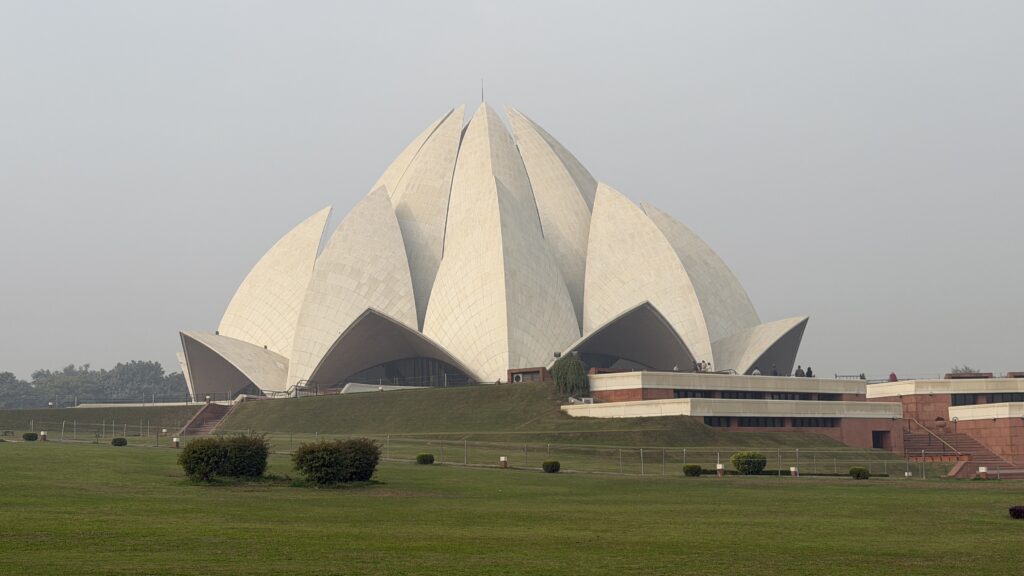
For contrast, we visited the Lotus Temple, striking both architecturally and spiritually. A Bahá’í House of Worship, it is open to people of all religions and built around the idea of unity and equality. Shaped like a blooming lotus flower, the temple’s bright white exterior and silent interior felt worlds away from Delhi’s constant motion—and offered a rare moment of stillness.
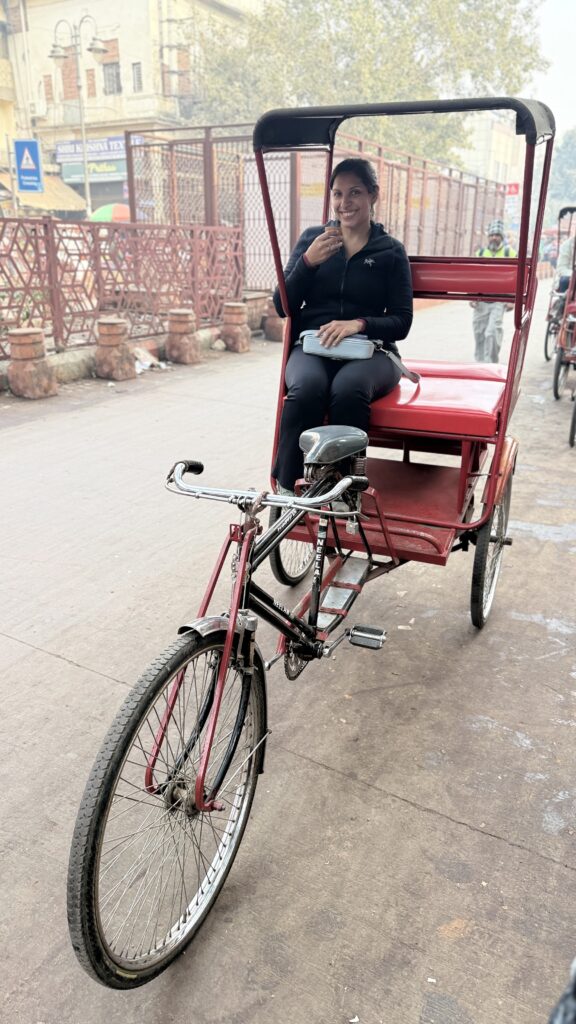
To experience Delhi at street level, we did a bicycle tuk-tuk ride through Chandni Chowk. It’s chaotic, crowded, loud—and absolutely essential. This is where Delhi feels most alive: spice markets, fabric shops, honking horns, and constant motion. We stopped for chai served in clay cups, watched daily life unfold from the tuk-tuk, and fully embraced the sensory overload.
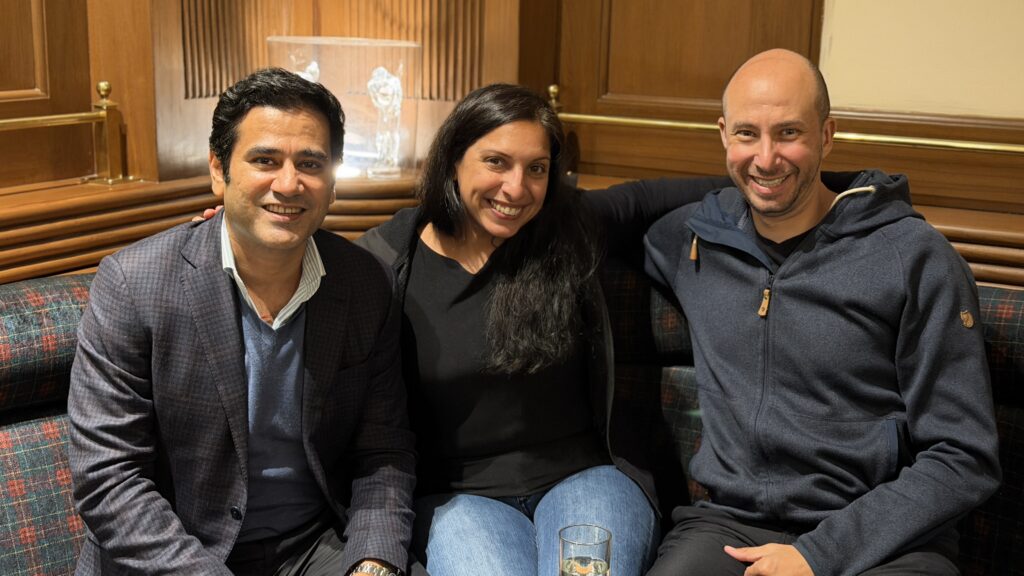
That evening, we spent time with Gaurav, a close friend from business school, over dinner at Bukhara. The food was good, but the real highlight was the familiarity—easy conversation, shared history, and the grounding feeling of reconnecting with old friends in the middle of a whirlwind trip.
The Train to Agra
We took the train from Delhi to Agra, which was both practical and an experience in itself. It was efficient, comfortable, and offered a glimpse into everyday travel in India—something you miss entirely if you move only by car.
Agra: Iconic for a Reason
Agra revolves around one monument, and we embraced that fully.
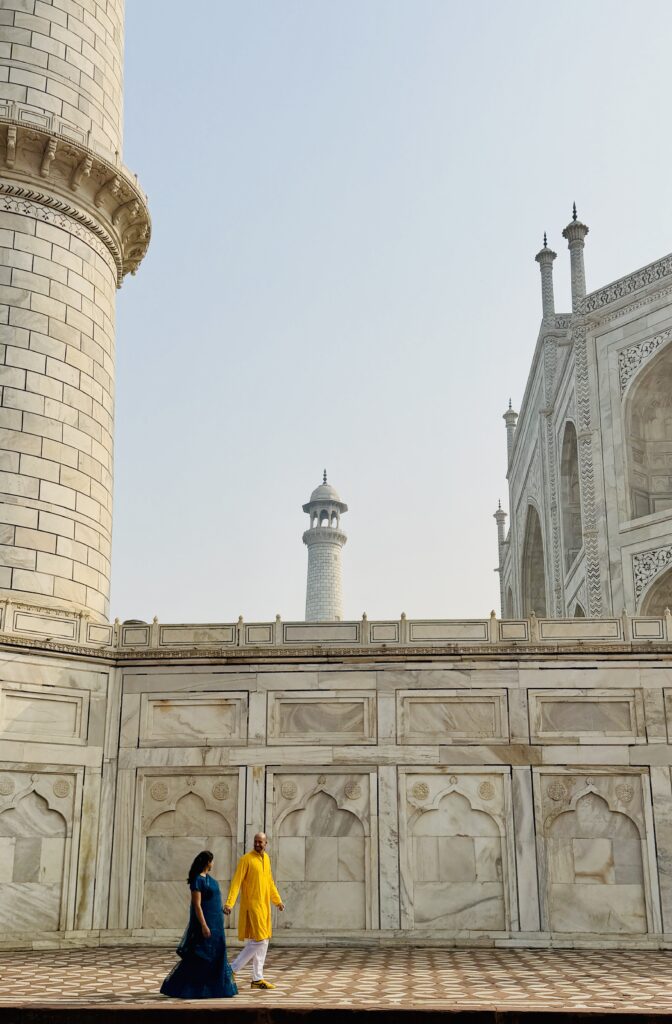
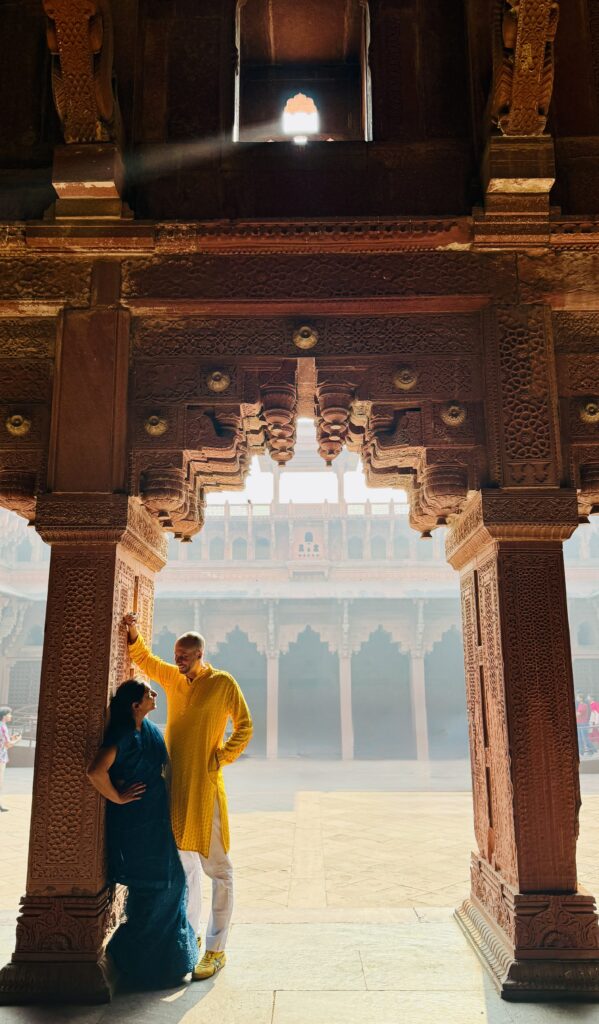
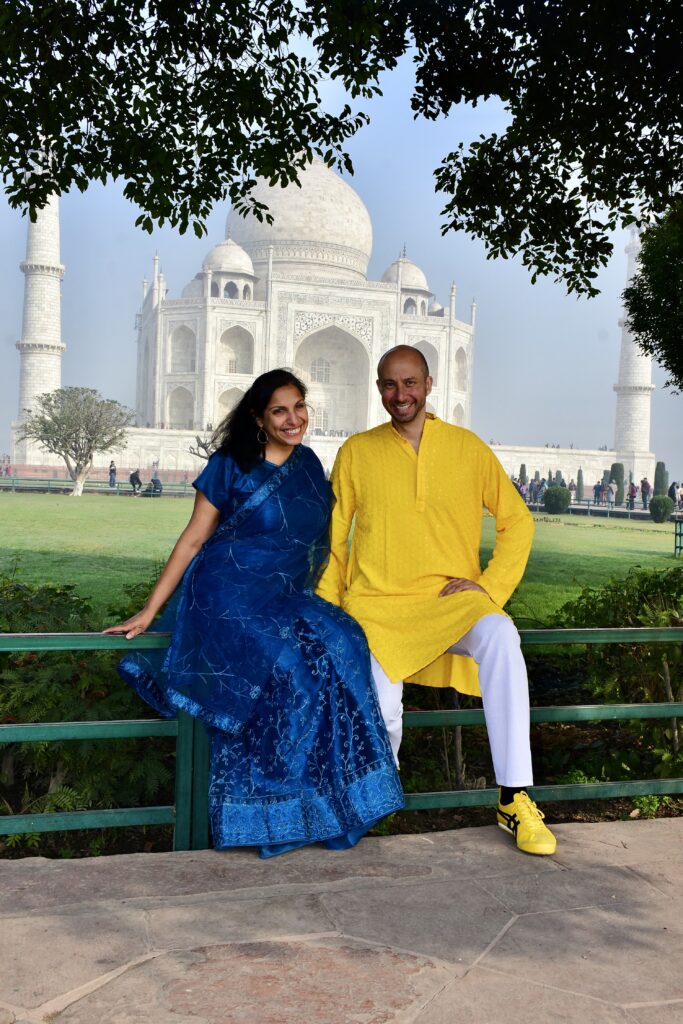
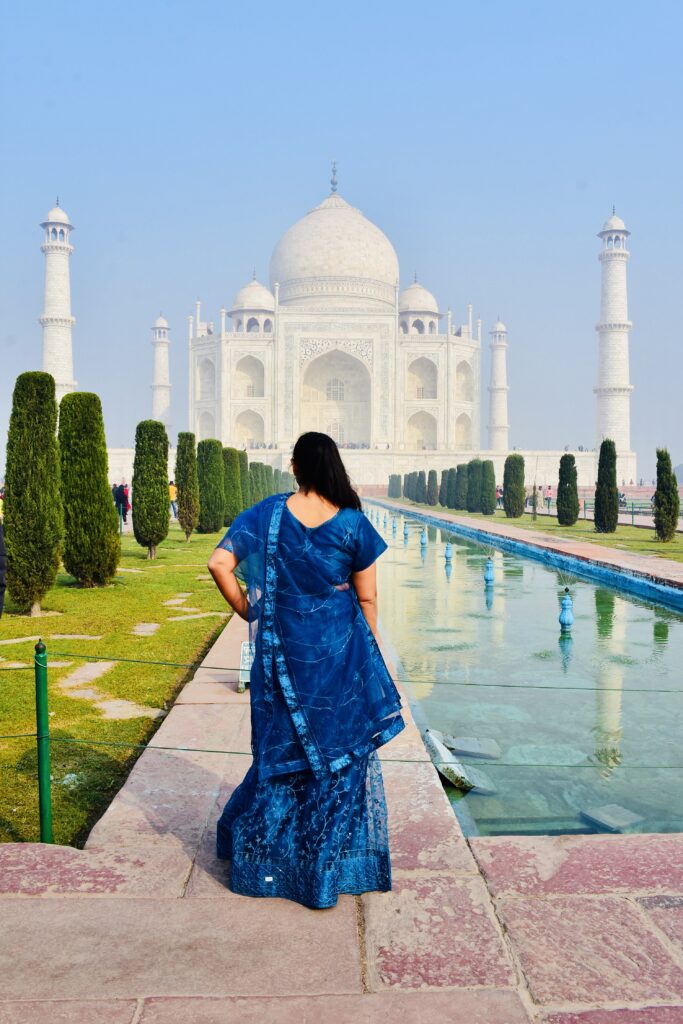
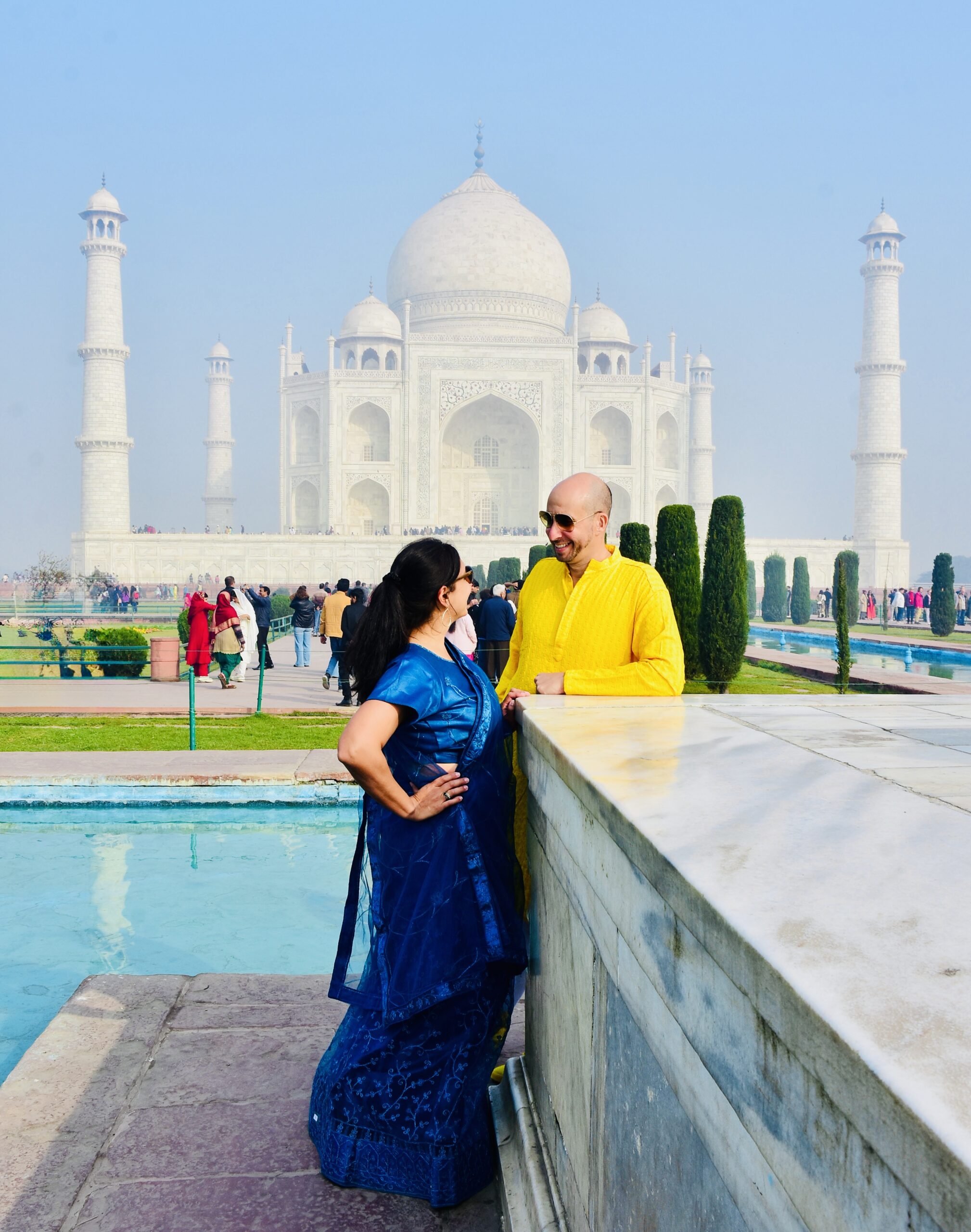
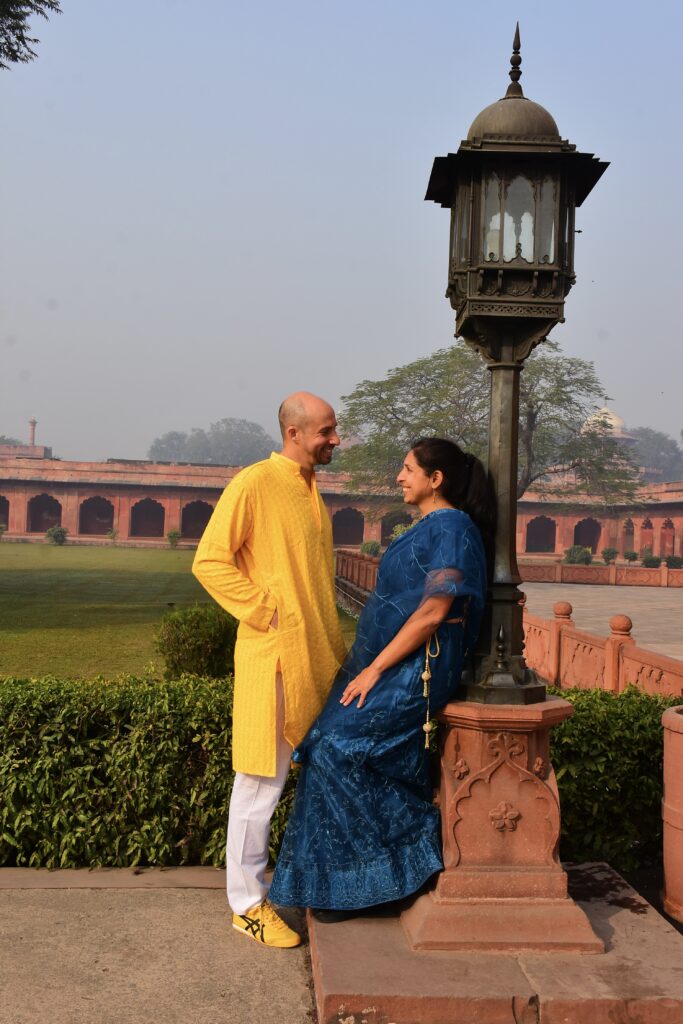
We visited the Taj Mahal early and decided to make the experience extra special by wearing traditional Indian clothing. It added a celebratory, intentional feel to the visit and resulted in photos that feel both timeless and deeply personal.
Equally important was our guide, Asif, who brought the Taj to life with a thoughtful and detailed historical tour. His storytelling—about love, loss, power, and precision—added depth and context that made the experience far more meaningful than simply walking the grounds.
Later, we explored Agra Fort, an essential companion to the Taj. Massive, strategic, and surprisingly elegant, it offers sweeping views back toward the monument itself and helps frame the political and imperial power behind its construction.
We were scheduled to take the fast train to Ranthambore that afternoon, but despite careful planning and padding extra time, Agra traffic had other ideas. We missed the train and ended up spending the afternoon—and well into the evening—driving instead.
lola
Hi where did you rent indian clothes from in agra? n how much please? Thanks a lot.
Shivani
Hi Lola – we actually organized the rentals with our guide, Asif, and stopped by the store the morning of our tour. I don’t remember the exact price of the rentals, but I think it was around $20-30 (probably still overpaid but I did negotiate!). Hope this helps, and if you want to be connected to Asif, let me know!
Elizabeth Ann Robey
Please send Asif’s contact information. We will be in Agra in February. How far in advance did you book with him?
I have enjoyed reading your travel experiences. Thanks for posting.
Shivani
Hi Elizabeth – Asif’s whatsapp is +91 97605 52226. We went in January and booked in the same week so I think you have some time. But of course, always better to reserve ahead of time if you can!