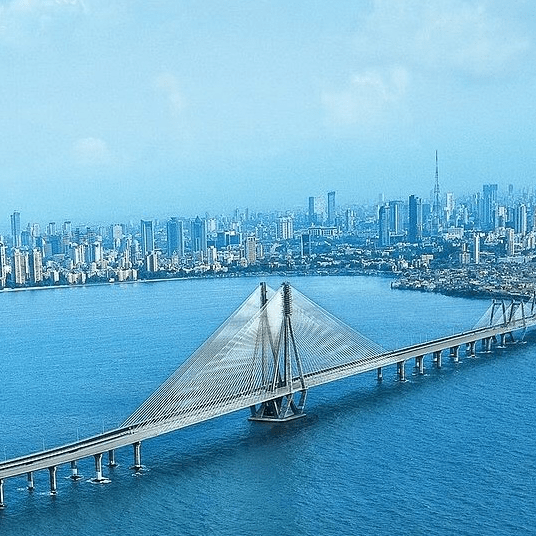



Ajanta and Ellora Caves: A Complete Travel Guide from Aurangabad
Some trips you plan for yourself. Others you take for someone you love. The Ajanta and Ellora Caves had been on my dad’s bucket list for years, so when the opportunity came up, I joined my parents on this adventure. We flew from Mumbai to Aurangabad, the closest airport and the most practical base for visiting the Ajanta and Ellora Caves. As an added bonus, two of our closest family friends, Suhansini Aunty and Vidhadyar Uncle, were on a similar itinerary and joined us for the Ajanta portion of the trip.
Ajanta Caves: Ancient Buddhist Art That Defies Time
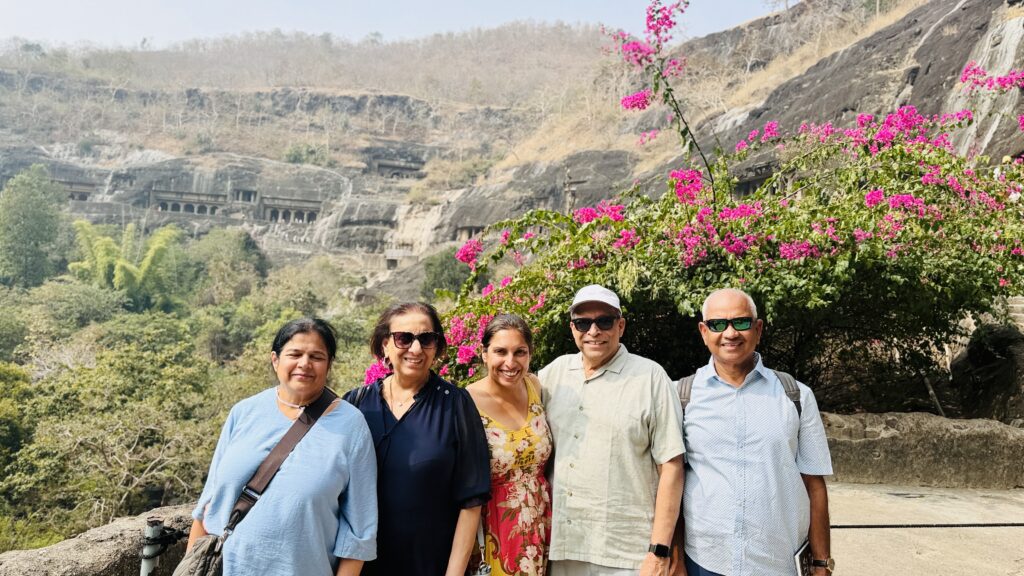
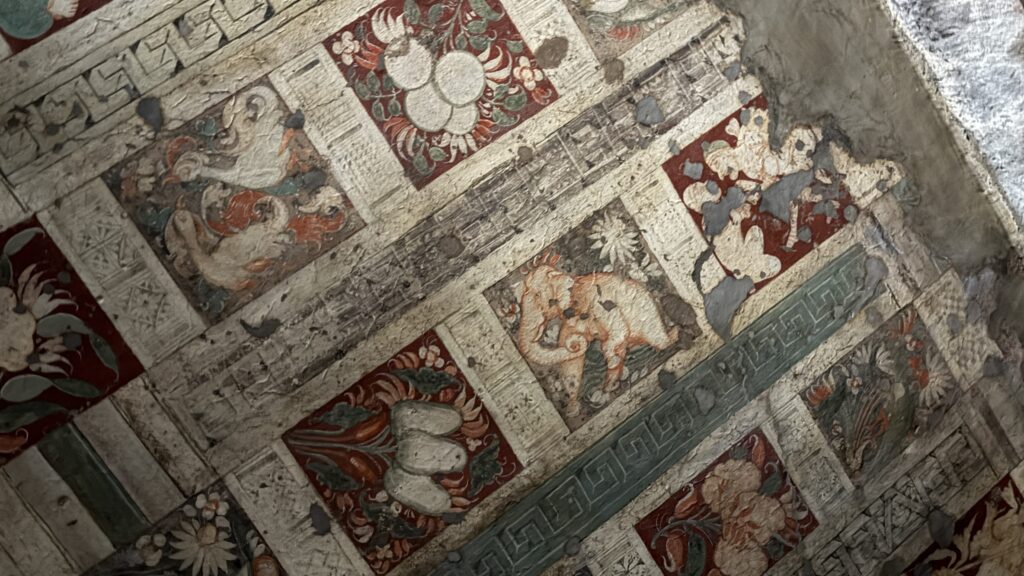
Ajanta is the farther of the two UNESCO World Heritage Sites—about a 2–3 hour drive from Aurangabad—and it is world-famous for its remarkably preserved Buddhist paintings. Carved into a dramatic horseshoe-shaped cliff, the Ajanta Caves date back to the 2nd century BCE and served as Buddhist monasteries and prayer halls. What makes Ajanta extraordinary is not just the scale, but the surviving murals. The detail, color, and storytelling are astonishing given their age. With the right guide, you begin to understand how deeply symbolic Buddhist art was—down to the gestures, facial expressions, posture, and narrative scenes from the Jataka tales (stories of the Buddha’s previous lives). Without context, it is easy to miss what you are actually looking at. With a knowledgeable guide, the walls come alive and the caves transform from stone chambers into immersive storytelling galleries.
Ellora Caves: Monumental Architecture on Another Level
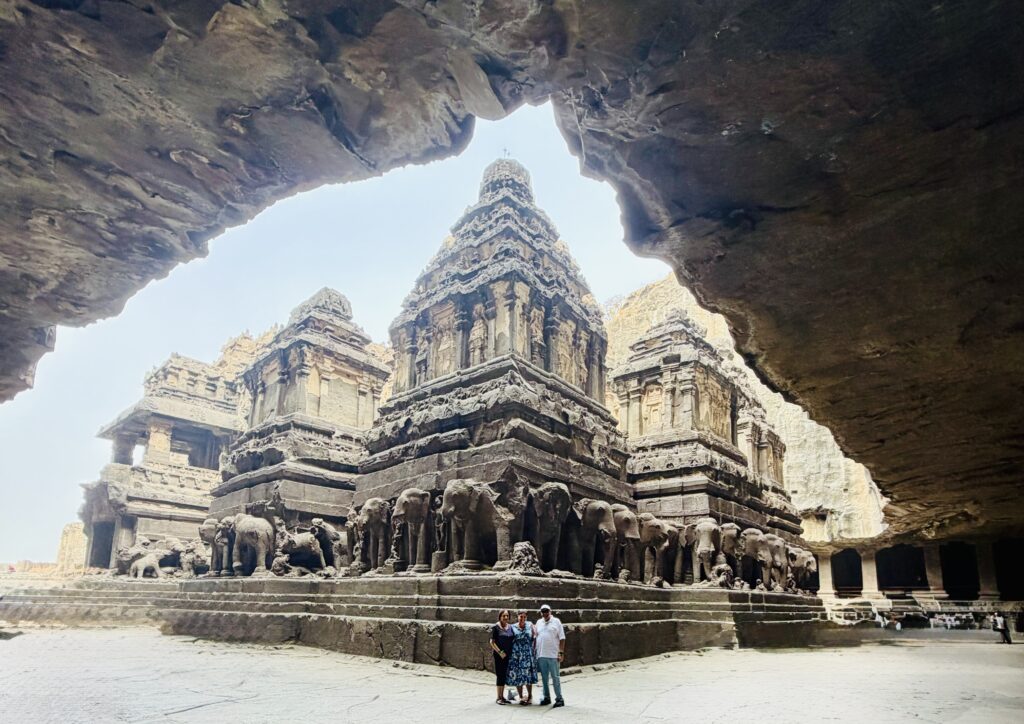
Ellora is much closer to Aurangabad—about an hour away—and for me, it was the more jaw-dropping of the two sites. What sets Ellora apart is that Buddhist, Hindu, and Jain caves were all constructed here between the 6th and 10th centuries CE, coexisting within a single complex. That alone feels significant from a cultural and historical perspective. But then there is Cave 16: the Kailasa Temple. Cave 16 is the crown jewel of Ellora—a massive Hindu temple dedicated to Lord Shiva, carved entirely out of a single rock. Not built with stone blocks, but excavated from the top down into the mountain itself, leaving behind a freestanding temple complex. Standing in front of it, it is difficult to comprehend the engineering precision, ambition, and sheer confidence required to attempt something of this scale. The intricacy of the carvings—depicting scenes from the Ramayana and Mahabharata—adds yet another layer of depth. This is the cave that stops you mid-sentence.
Bibi Ka Maqbara: The “Baby Taj”
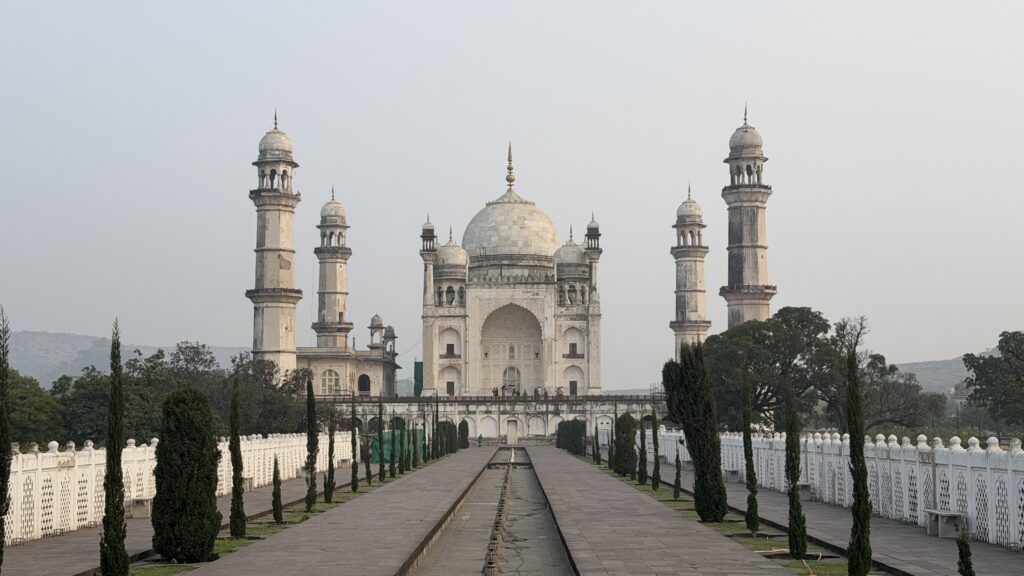
We also stopped at Bibi Ka Maqbara, often referred to as the “Baby Taj.” While it is commonly included on Aurangabad itineraries, it was easily the least compelling stop for me. Architecturally, it was inspired by the Taj Mahal—but the similarity largely ends there. The detailing is simpler, the materials less refined, and the overall experience feels underwhelming, especially if you have seen the original Taj Mahal. If you are short on time, this is a skippable stop.