


Jaipur: Palaces, Geometry, and Celebration
From Ranthambore, we drove about four hours to Jaipur. After arriving, we kept things intentionally low-key—ending the day at the hotel, watching traditional Rajasthani dancers and musicians perform in the courtyard before dinner. It was the perfect re-entry after safari days: calm, cultural, and unhurried.
A Day of Iconic Sights
The next day was dedicated to sightseeing, hitting Jaipur’s major landmarks. After having such a great guide in Agra, we asked him to help connect us with a guide in Jaipur—and he delivered. We had a knowledgeable guide, a car, and a driver arranged in advance, which made the day seamless.
We started a bit later than planned (Adam wasn’t feeling great), so we kept the morning relaxed and eased into the day.
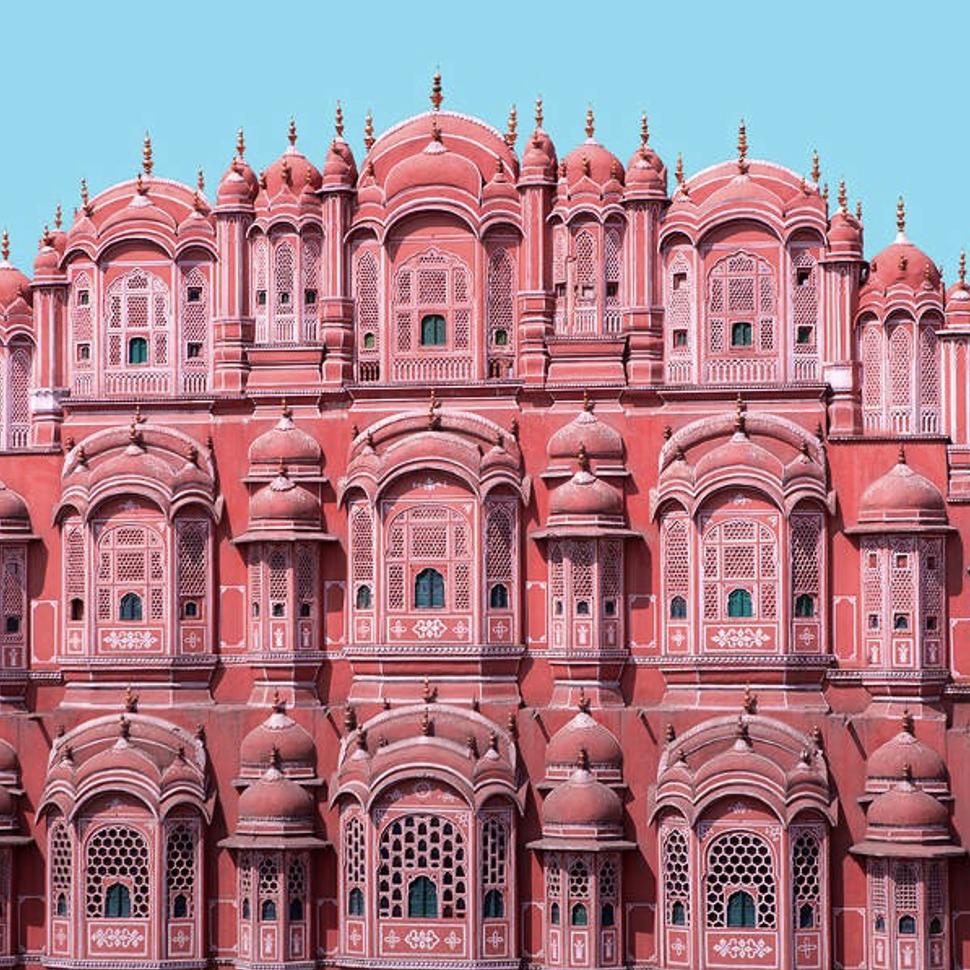
Our first stop was Hawa Mahal, the iconic Palace of Winds. Designed with hundreds of small latticed windows, the structure allowed royal women to observe daily life on the streets below without being seen. We didn’t linger long—this is best as a quick photo stop—but its honeycomb façade is unmistakable and instantly sets the tone for Jaipur’s architectural elegance.
From there, we walked over to Jantar Mantar, one of the most impressive and unexpected highlights of the day. Built in the early 18th century by Maharaja Sawai Jai Singh II, this UNESCO-listed astronomical observatory is filled with massive stone instruments designed to measure time, track celestial bodies, and predict eclipses—with astonishing accuracy. Seeing science, mathematics, and architecture intersect at this scale was genuinely impressive and speaks volumes about the intellectual ambition of the era.
Next, we headed to the City Palace, still partially occupied by Jaipur’s royal family. Architecturally, it blends Mughal and Rajasthani styles—grand courtyards, ornate gateways, and intricately detailed interiors. We opted for the more expensive ticket, which was absolutely worth it. It granted access to beautifully curated rooms and photographic spaces that feel both regal and intimate, and allowed us to move through the complex at a more relaxed pace.
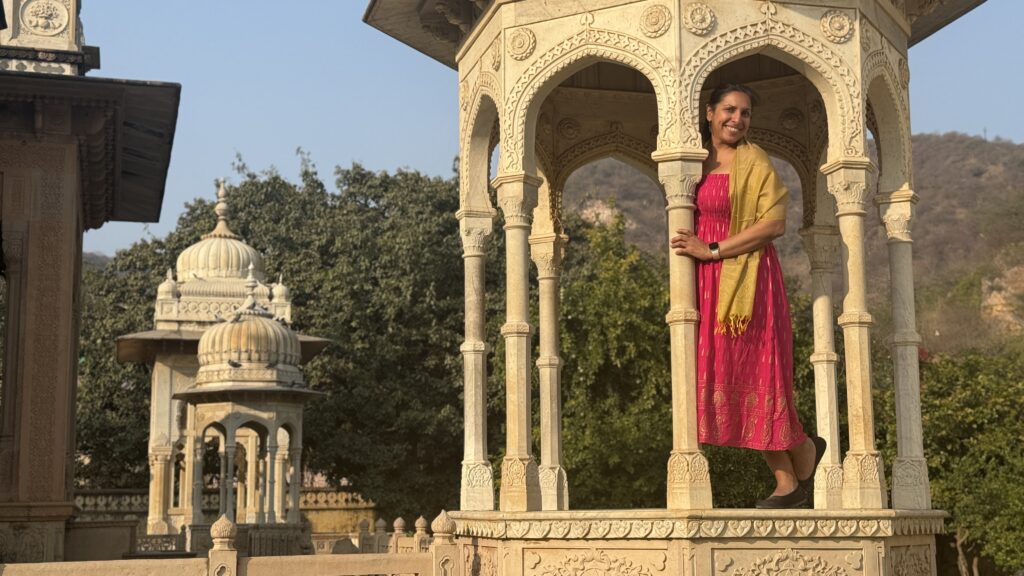
After City Palace, we made our way to Gaitor Ki Chhatriyan, one of Jaipur’s most underrated stops and an incredible photo location. Set against the hills, these royal cenotaphs are quiet, elegant, and far less crowded than the city’s main attractions. The white marble structures, detailed carvings, and serene atmosphere offered a striking contrast to the bustle of central Jaipur.
Our next stop was Panna Meena ka Kund, a perfectly symmetrical stepwell tucked near Amer Fort. Its geometric staircases form repeating patterns that feel almost modern in design. It’s small but incredibly photogenic, and a reminder of how functional infrastructure was once treated as an art form.
We saved Amer Fort for last—and timing could not have been better. Perched on a hill overlooking Maota Lake, the fort is dramatic in scale, with mirrored halls, expansive courtyards, and panoramic views of the surrounding landscape. We arrived close to sunset, when the light softened and bathed the fort in warm tones. It was easily one of the most beautiful and cinematic moments of the entire trip.
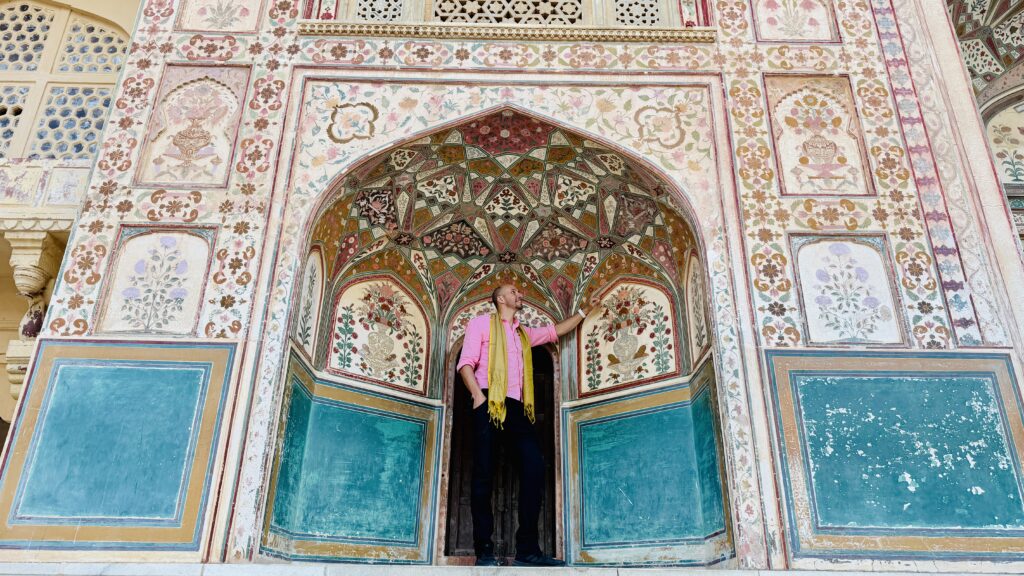
This city is undeniably picturesque. Jaipur’s “Pink City” palette feels tailor-made for photography, so dress the part—flowy silhouettes, warm tones, and traditional fabrics fit right in.
Festival Energy and a Perfect Farewell
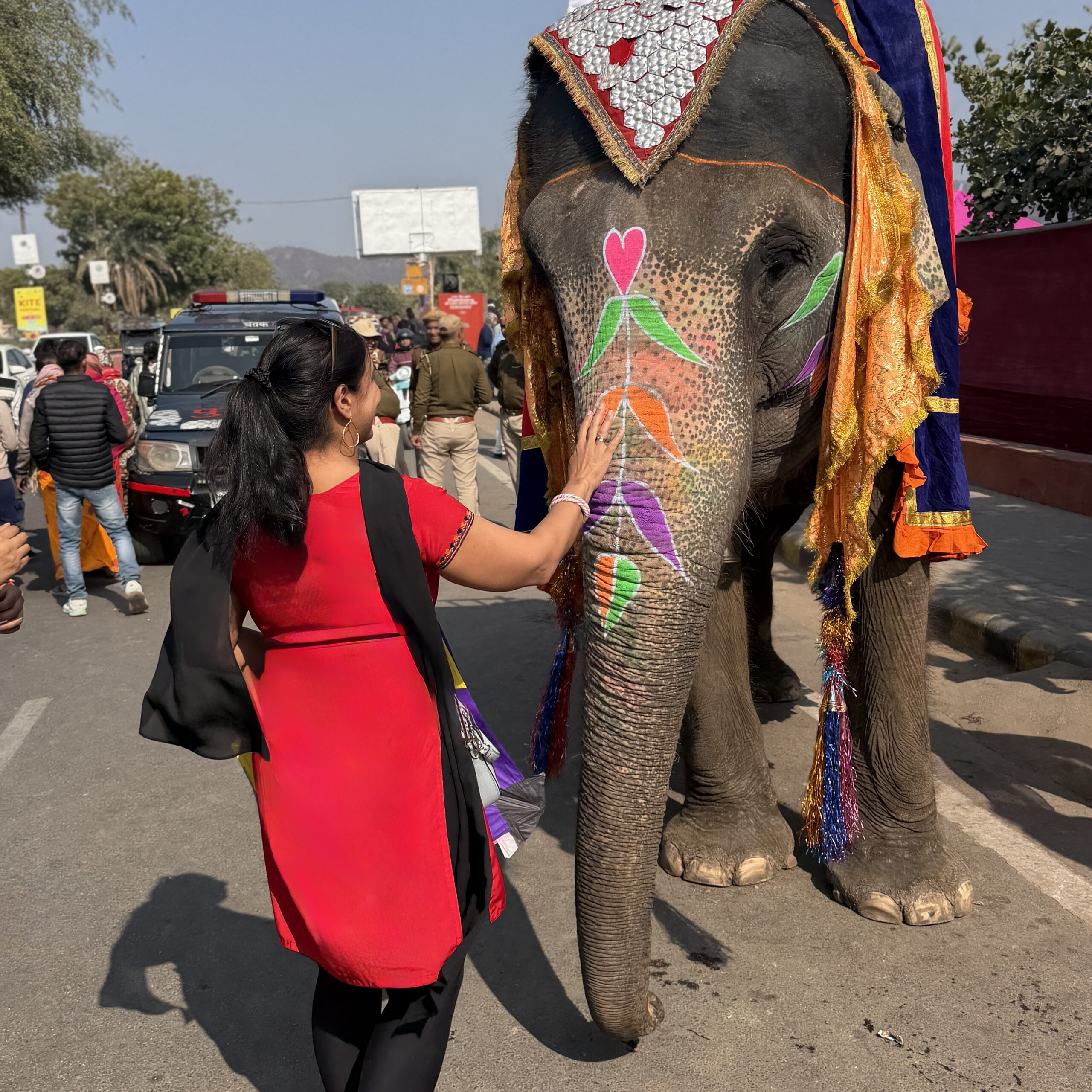
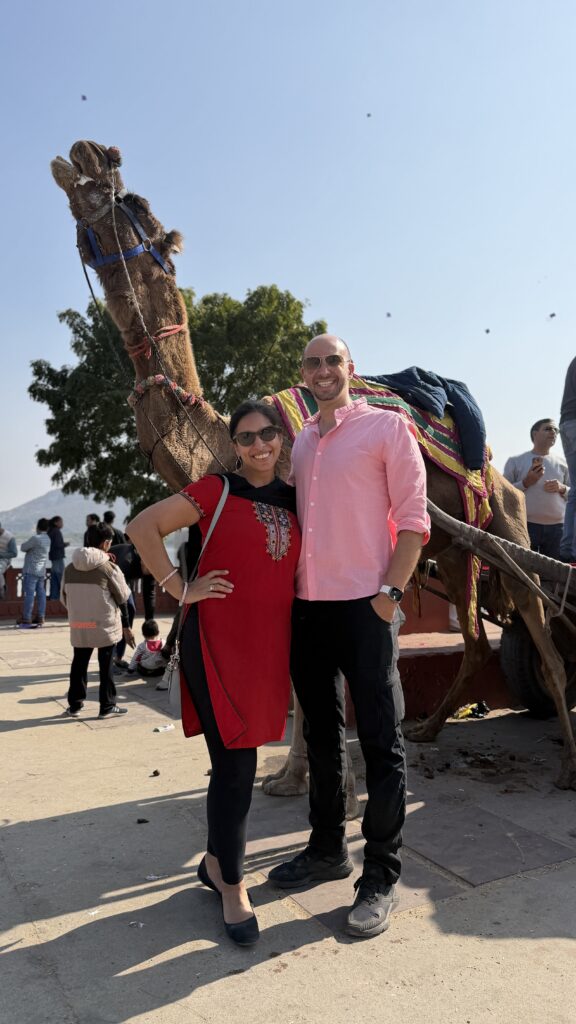
On our final day, it was Makar Sankranti, and Jaipur—like many cities across India—was celebrating with a citywide kite festival. We stopped by Jal Mahal, the Water Palace, floating serenely in the middle of the lake. We attempted (unsuccessfully) to fly a kite, met camels and elephants, and soaked in the festive energy that filled the air.
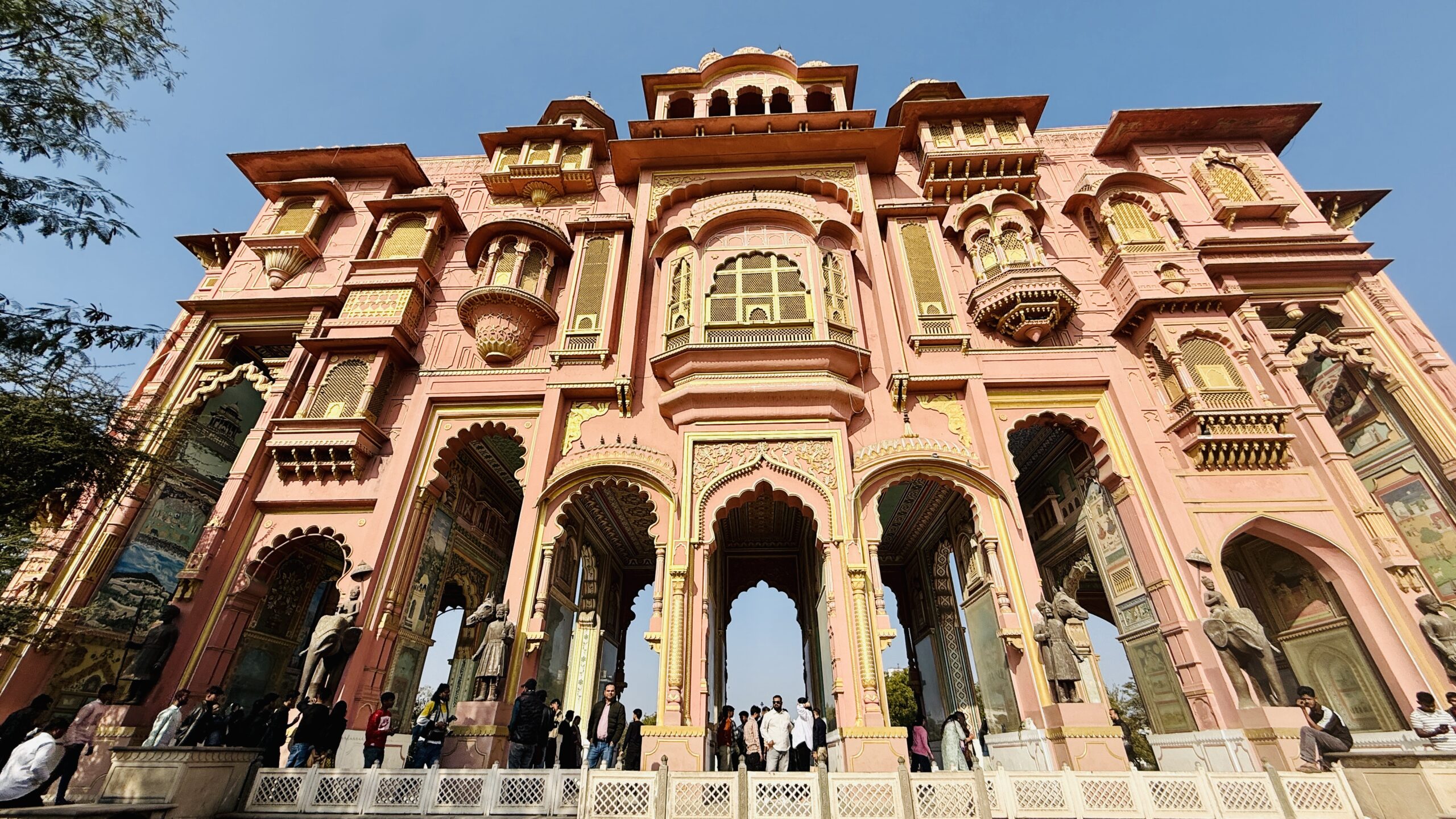
On the way to the airport, we made one last stop at Patrika Gate, one of the most vibrant and beautifully painted gates in India. Every arch is hand-painted with symbols representing Rajasthan’s culture, history, and landscapes. It felt like a fitting final note—colorful, celebratory, and unmistakably Jaipur.