


Kerala, Unscripted: Fort Kochi, Munnar, and Slowing Down on the Backwaters
Kerala had originally been planned as a classic loop: a day soaking up the history and energy of Fort Kochi, followed by the cooler hills of Munnar and Thekkady for spice gardens and wildlife. But travel has a way of rewriting even the best-laid plans. When Adam got sick early in the trip, we pivoted—cutting Thekkady entirely and trading it for something Kerala does exceptionally well: rest.
What followed was a softer, slower version of the trip—Fort Kochi, Munnar, and two unexpectedly perfect days doing very little at the Taj Malabar in Cochin. And honestly? It felt exactly right.
Fort Kochi: History, Color, and a Solo Tuk Tuk Adventure
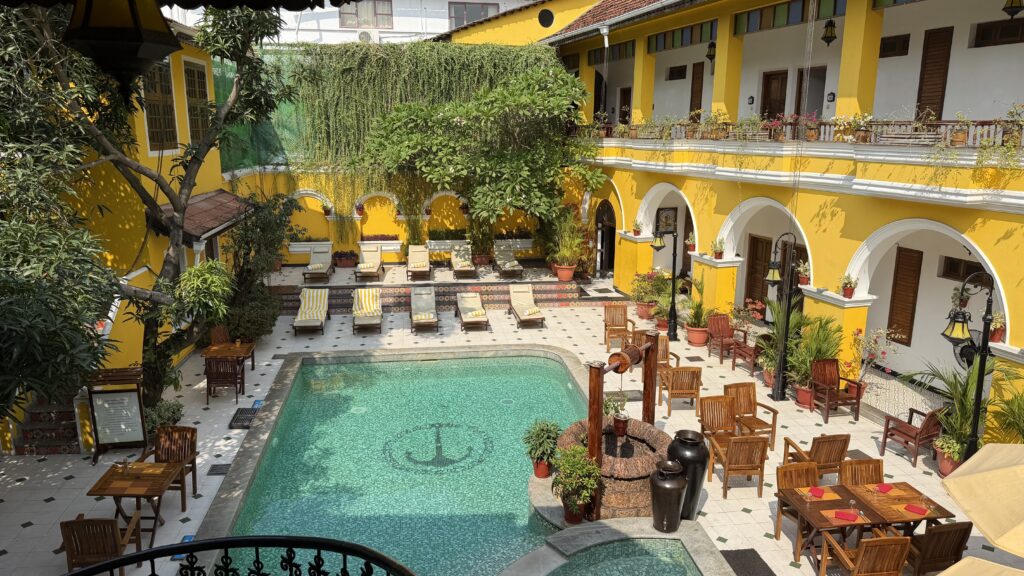
We based ourselves at Hotel Fort Kochi, a beautiful boutique property right in the heart of the historic district. The location couldn’t have been better—quiet enough to feel removed, but steps away from Fort Kochi’s layered history and lively streets.
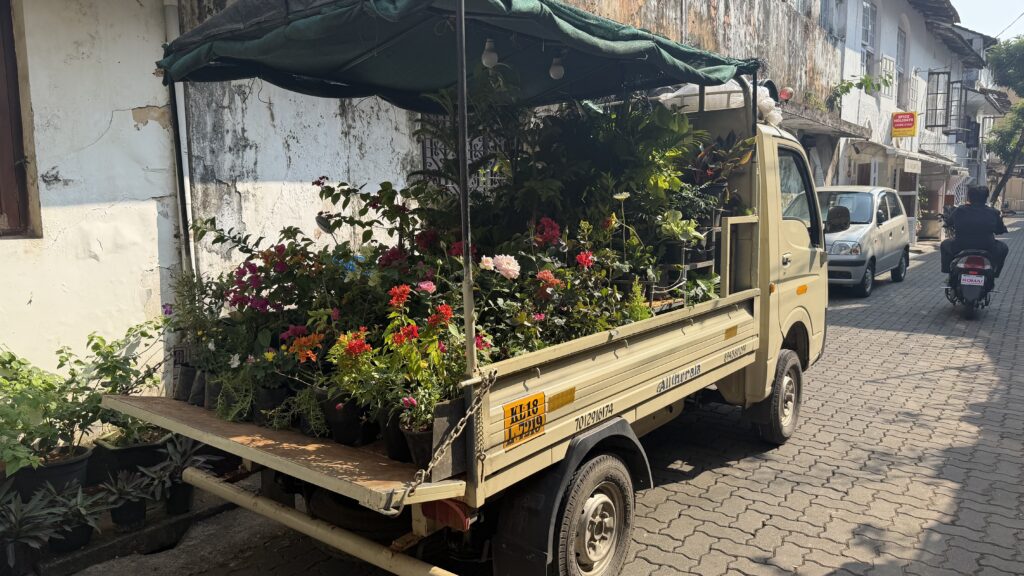
Since Adam wasn’t feeling up to exploring, I hired a tuk tuk and covered most of Fort Kochi’s highlights in just a couple of hours. It was an easy, efficient way to see the area—and riding solo through narrow streets made it feel even more immersive.
Stops included:
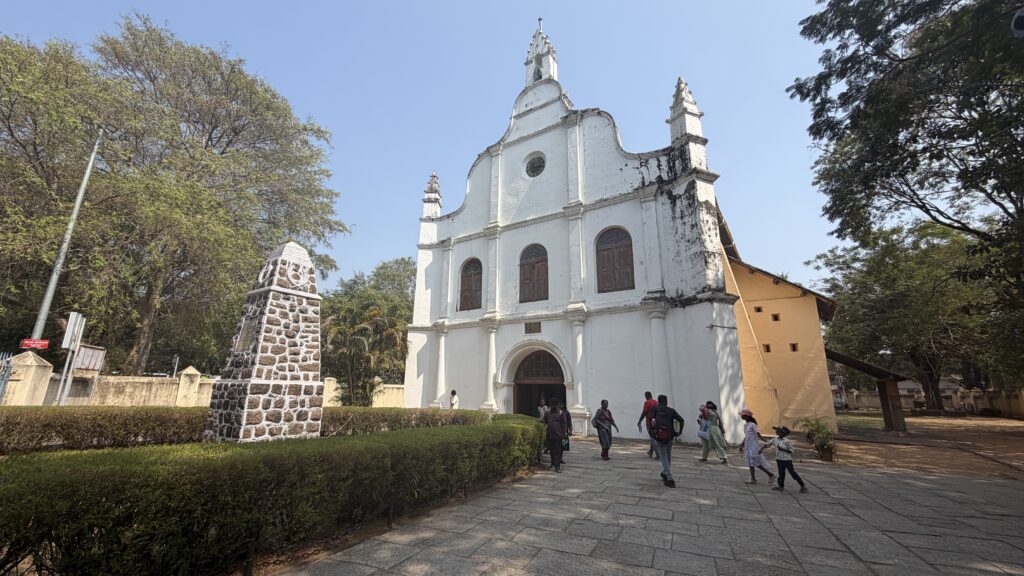
• St. Francis Church, where Vasco da Gama was originally buried
• Wandering through Jew Town, home to the Paradesi Synagogue, the oldest active synagogue in the Commonwealth
• The Dutch Palace, with its murals and glimpse into Kerala’s royal past
• And, of course, the iconic Chinese fishing nets, silhouetted against the water
Fort Kochi feels like a place where centuries overlap—Portuguese, Dutch, British, Jewish, and Indian influences layered into architecture, food, and street life. Even in a short visit, it leaves an impression.
The Drive to Munnar: Tea, Waterfalls, and Cooler Air
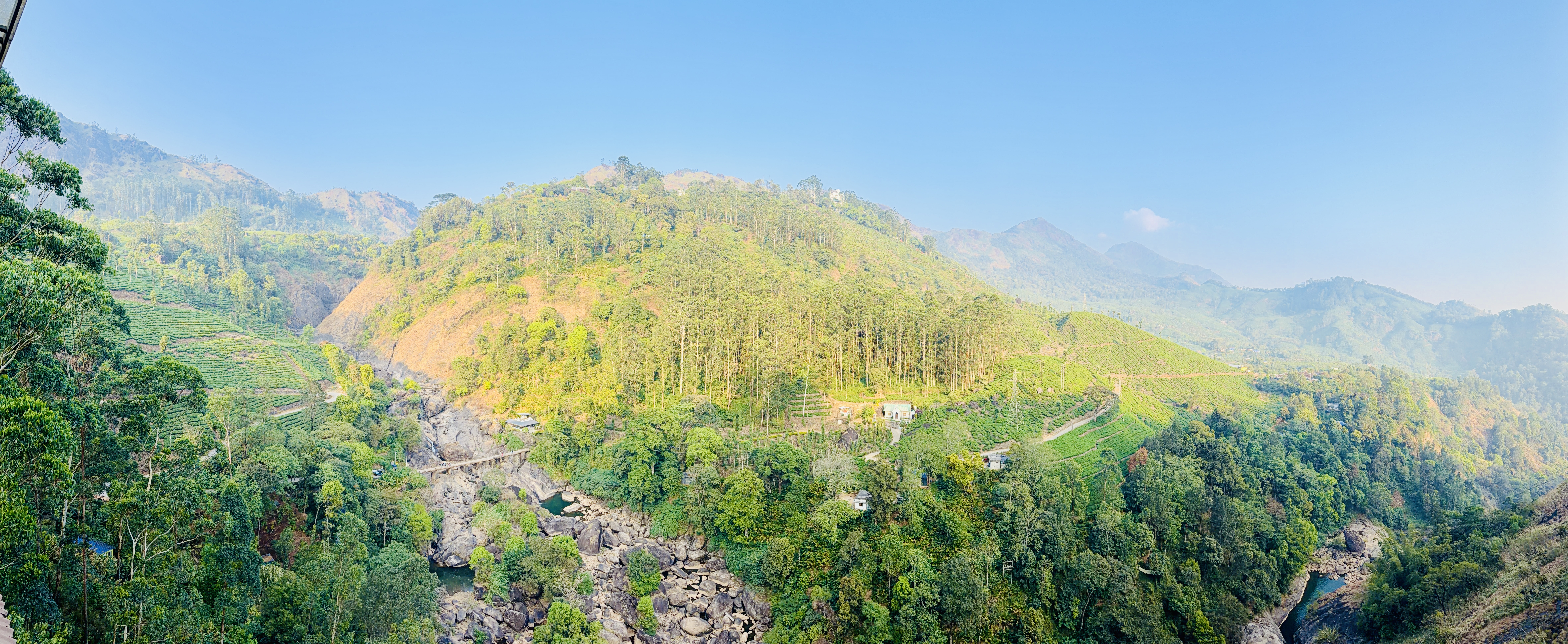
From Fort Kochi, we headed inland to Munnar, and the scenery itself was a highlight. The landscape gradually shifts from coastal lowlands to winding mountain roads, with waterfalls, spice gardens, and rolling tea estates appearing as you climb higher.
Along the way, we:
• Visited a spice garden, learning how cardamom, pepper, cinnamon, and nutmeg grow and the many healing properties of various plants…after all, we are in teh home of aruvedha
• Stopped at waterfalls cascading down lush green cliffs (although they were very dry!)
• Passed endless tea plantations, their geometric rows covering the hills as far as you can see
Munnar is strikingly scenic—cooler, greener, and calmer than the coast, with an almost surreal sense of scale.
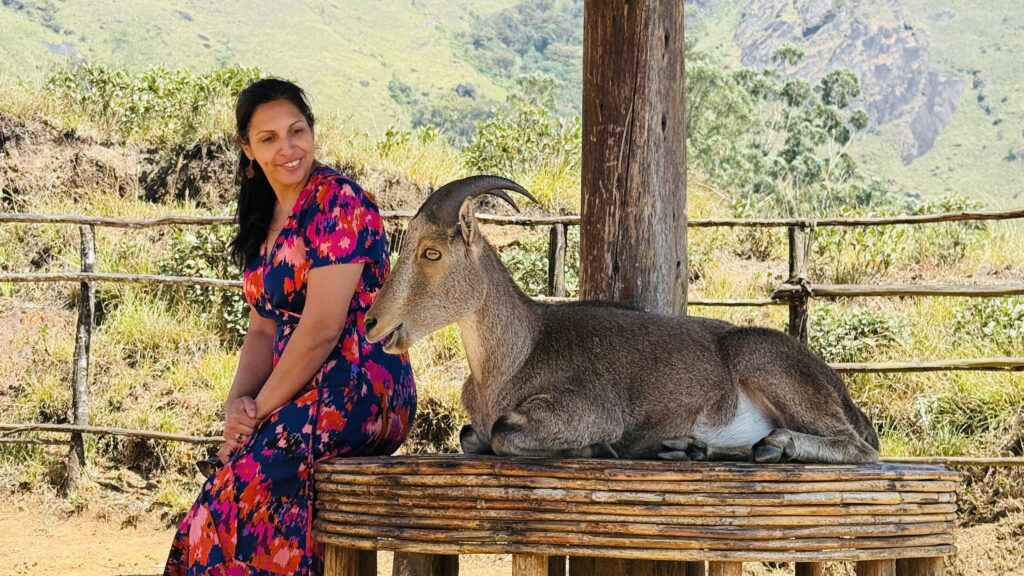
One of the most memorable experiences was visiting Eravikulam National Park, home to the endangered Nilgiri Tahr. These mountain goats are surprisingly unbothered by humans, calmly grazing just feet away. Seeing an animal so rare—and so at ease—was a quiet reminder of how special this region is.
Back to Cochin: Two Days of Doing (Almost) Nothing at the Taj Malabar
Instead of continuing on to Thekkady, we doubled back to Cochin and checked into the Taj Malabar Resort & Spa—a decision that transformed the second half of the trip.
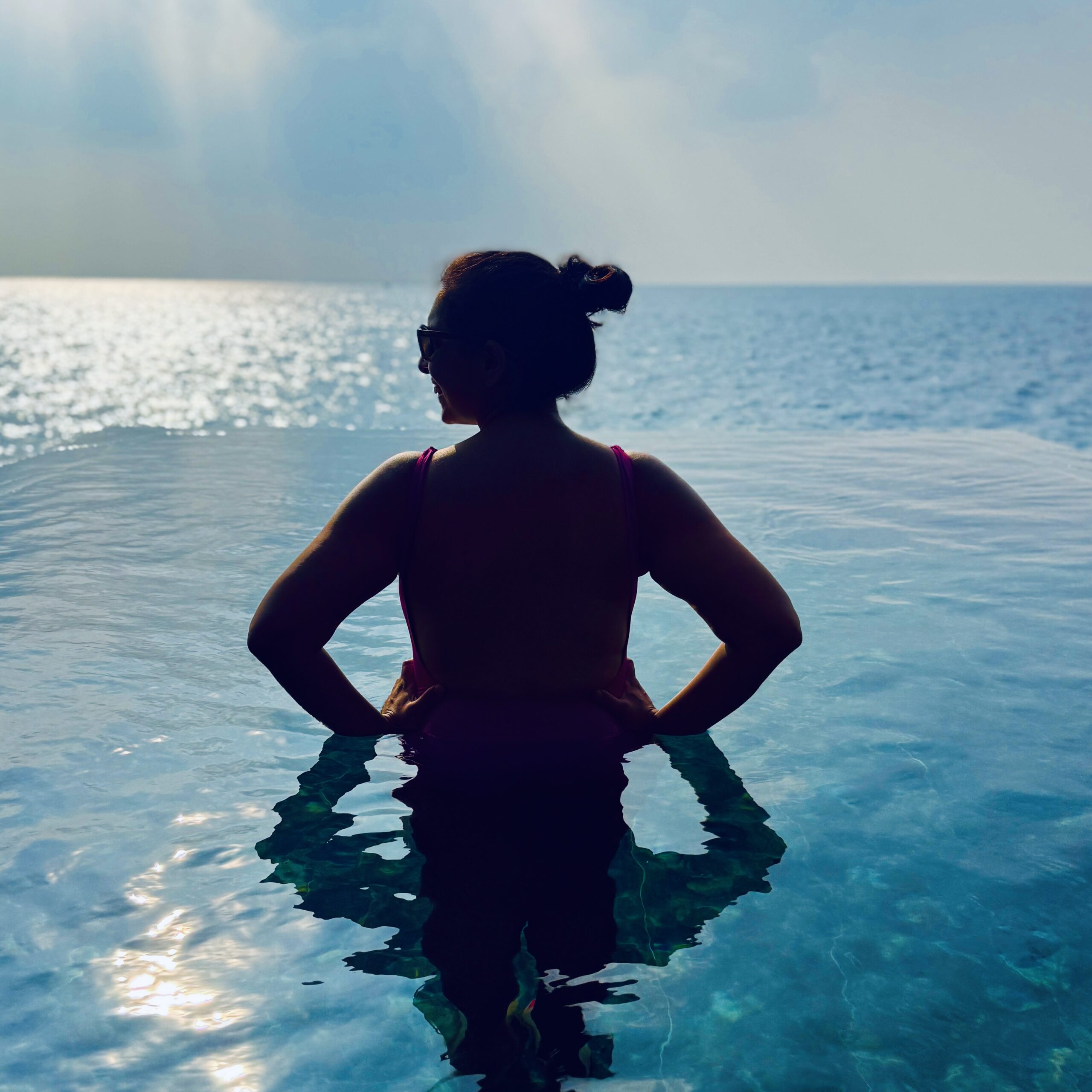
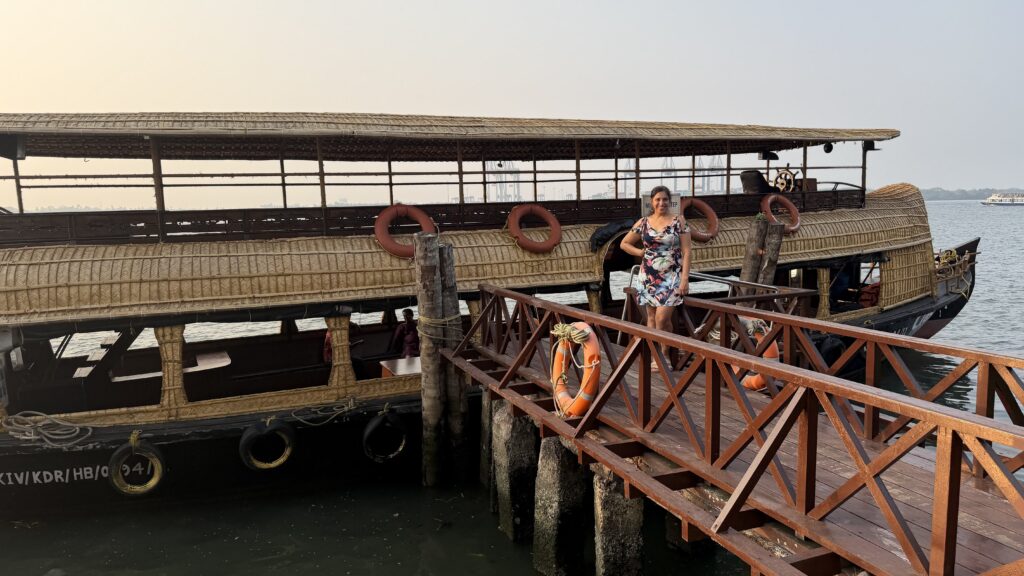
Set directly on the backwaters, the property is designed for slowing down. We leaned fully into that.
• Daily massages, both days, which were excellent
• A sunset backwater cruise arranged by the hotel
• Mornings waking up to porpoises breaching right outside our room
• Feeding koi fish in the property’s koi pond, which felt unexpectedly joyful
Our room faced the water, and watching the backwaters come alive in the early morning—boats passing, birds calling, porpoises surfacing—became part of the daily rhythm.
The Taj Malabar has three onsite restaurants, and we ate at two of them. The food was consistently solid, with a good mix of local Kerala flavors and more familiar options—easy, comforting dining without needing to leave the property.
Final Thoughts: A Different Kind of Kerala
This wasn’t the Kerala itinerary we planned—but it ended up being the Kerala we needed.
Instead of rushing from stop to stop, the trip became about contrasts:
• History and motion in Fort Kochi
• Nature and altitude in Munnar
• Stillness and water at the Taj Malabar
Kerala is often marketed as “God’s Own Country,” and while that can sound cliché, there’s something undeniably restorative about the place—especially when you allow yourself to slow down.
If there’s one takeaway from this trip, it’s that Kerala rewards flexibility. Whether you’re exploring centuries-old streets, standing among tea-covered hills, or watching porpoises from your hotel room, it’s a destination that meets you where you are—plans or no plans at all.