


Chasing Jaguars: Five Days in the Pantanal, Brazil’s Tropical Wetland
The Pantanal is the world’s largest tropical wetland, a basin somewhere between 140,000 and 200,000 square kilometers spread across Brazil, Bolivia, and Paraguay (but mostly in Brazil), fed by the tributaries that feed into the Paraguay River. Unlike the dense, closed canopy of the Amazon, the Pantanal is open savanna and marsh, which means the wildlife isn’t hiding behind a wall of green. It’s out there, in the light, for anyone patient enough to look.
The whole system runs on a seasonal pulse. Torrential rains fill the basin, and when the water recedes, it leaves behind shallow pools thick with fish, drawing in flocks of egrets, storks, and spoonbills. This system allows the Pantanal to hold the densest concentration of wildlife on the continent: millions of caiman, the world’s highest density of jaguar, the largest population of cobalt-blue hyacinth macaws, 650 species of birds, the giant anteater, giant river otter, tapir, and so on.
The Pantanal is not an easy place to get to, and that is exactly what keeps it special. There are no chain hotels, no manicured resorts, none of the mass tourism infrastructure that has crept into so much of the world. Electricity usually runs on generators and cuts out often and cell reception is non-existant.
We arrived in Cuiabá with a plan to spend four nights, five days, traveling the Transpantaneira, a dirt road that cuts straight through the wetlands. This rocky road crosses through wild, unfiltered ground, offering everything from views of cattle and buffalo ranches to wild animals running across it.
Puival Lodge: Anteaters Up Close
Our first stop was Piuval Lodge, which organizes its own jeep safaris right on the property. The safaris can turn up tapir and even jaguar, but the giant anteater is the real draw. We saw two really up close on our morning safari, which was such a treat.
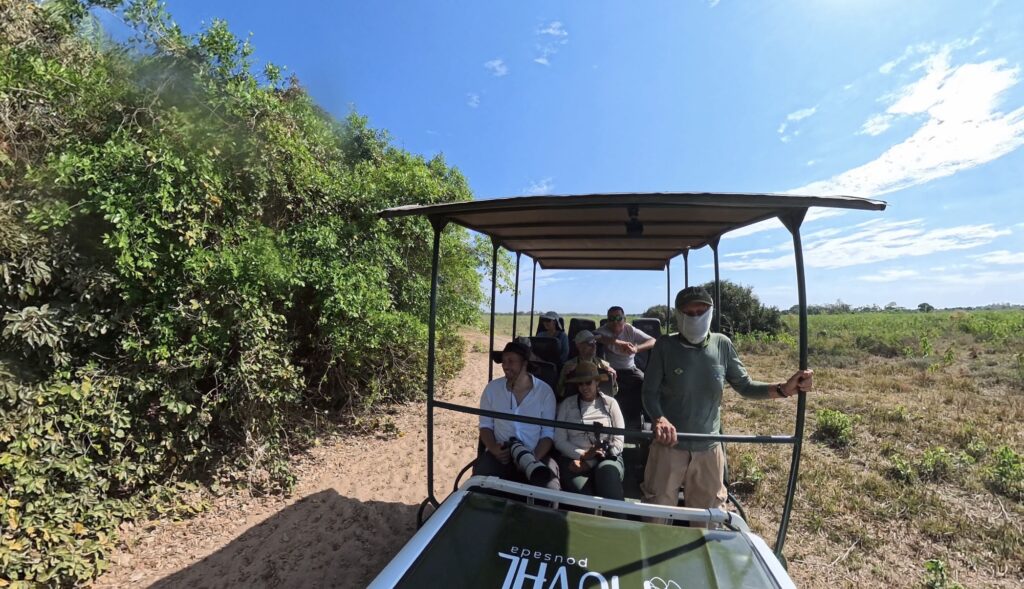
We also saw loads of monkeys, birds, and armadillos, which kept things interesting while we waited for the anteater to show.
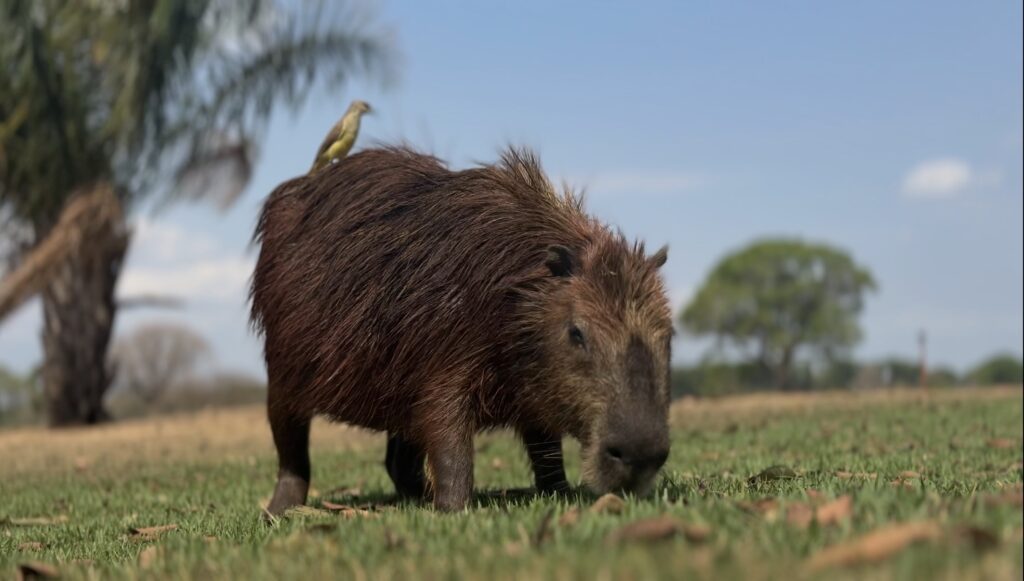
The lodge itself is a highlight beyond the safaris. The pool sits right beside a watering hole, so between drives you can wade in and cool off while capybara and ostriches wander past a few feet away. It’s the kind of property where you don’t have to leave your chair to see wildlife.
Southwild Lodge, Porto Jofre: Jaguar Territory
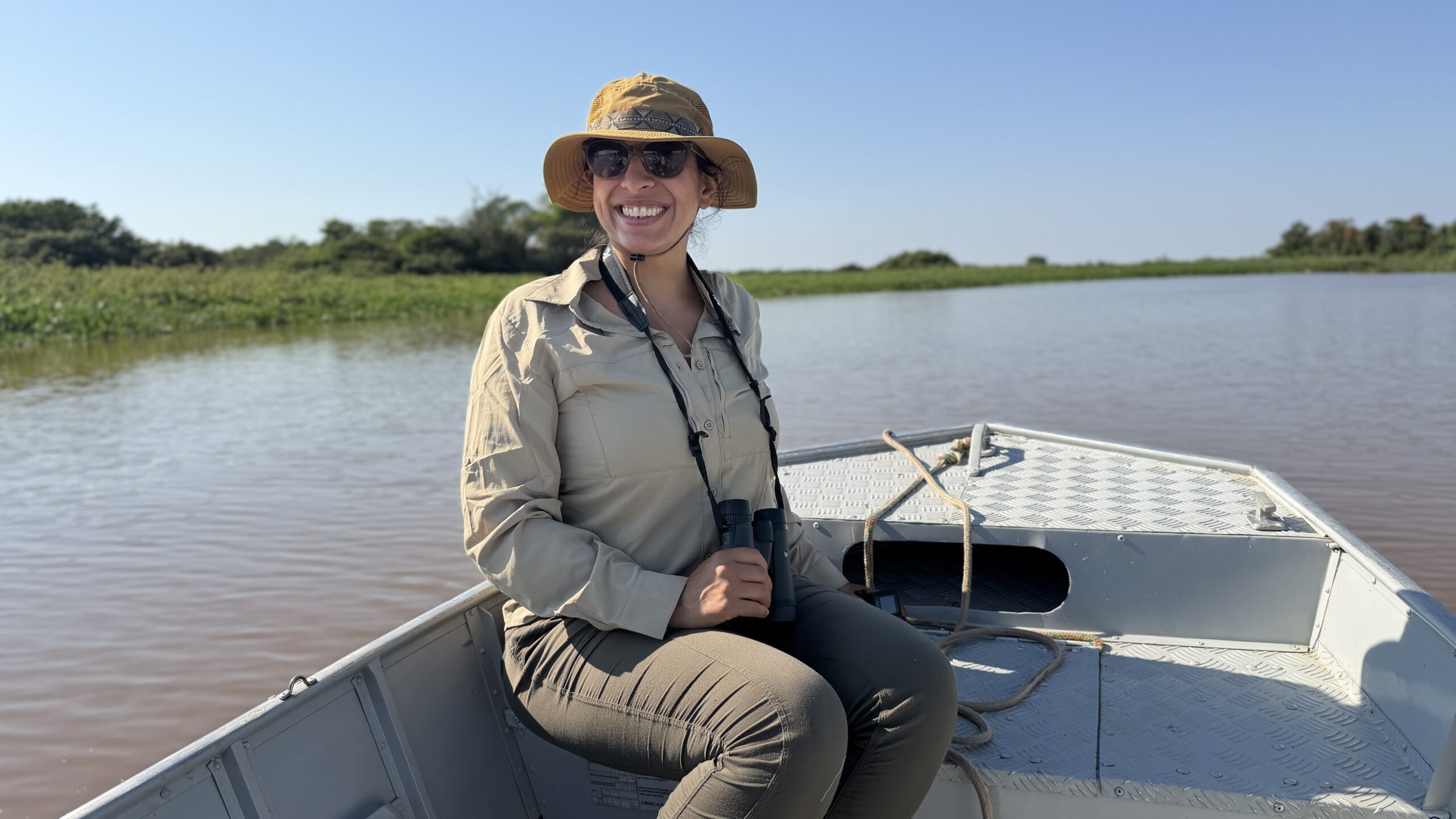
From Puival we moved to Southwild Lodge in Porto Jofre, the prime hotspot for jaguar sightings in the Pantanal. Three nights, five boat safaris, each one starting early in the morning: into the boat, down the river, in search of the elusive jaguar.
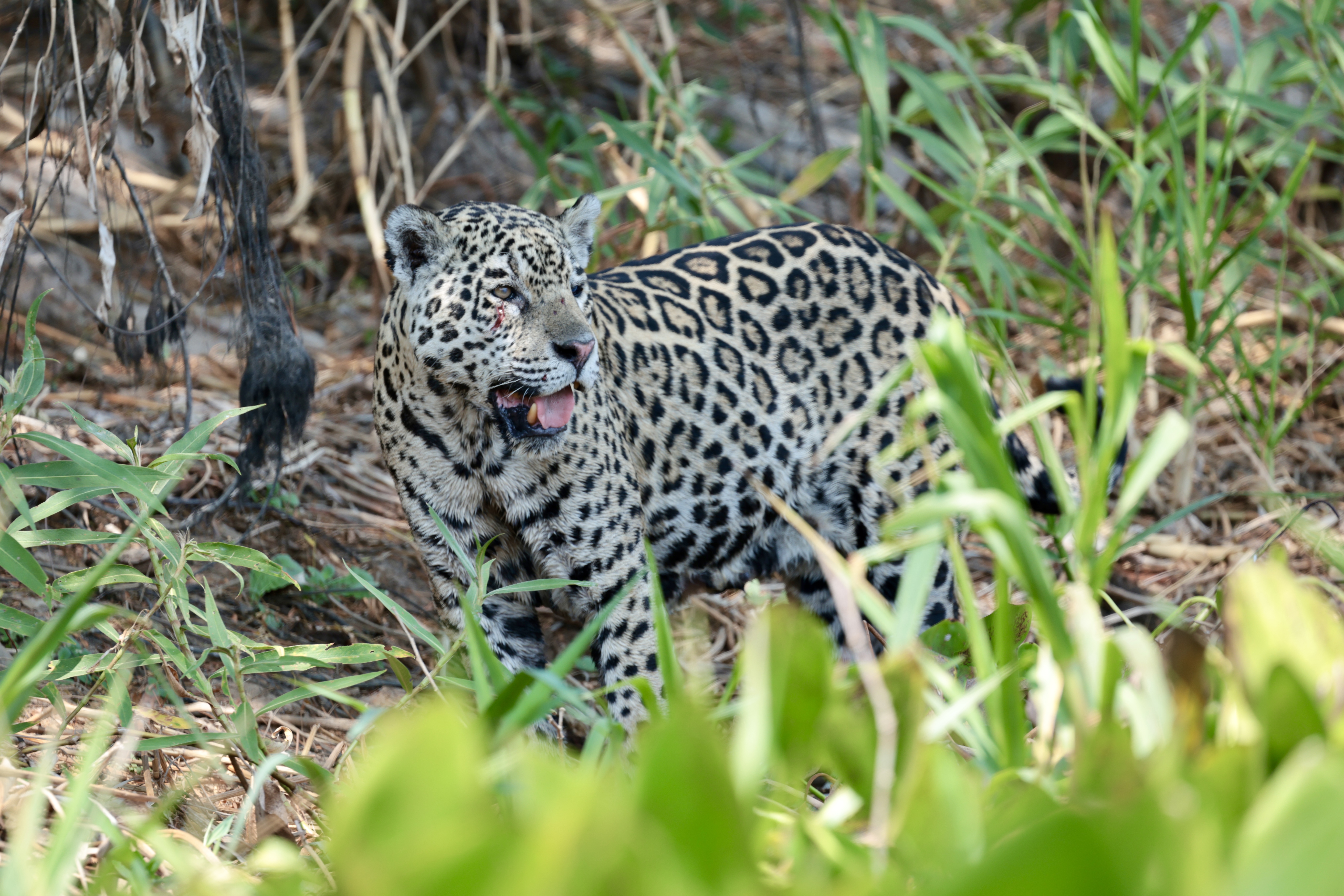
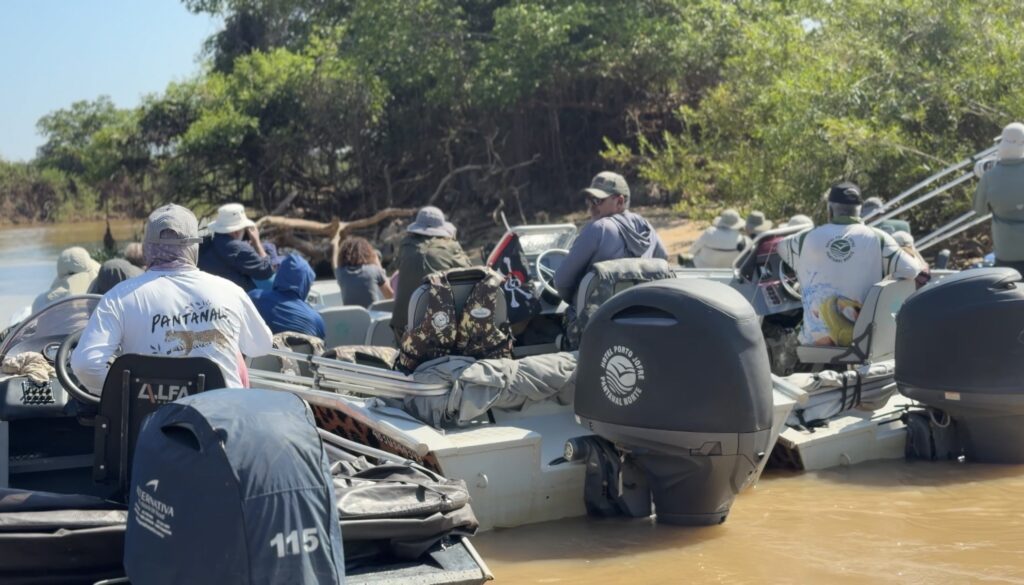
Elusive is the right word. Despite their rosette pattern, jaguars are camouflaged well against the riverbank brush, and finding one is genuinely a search. You are not looking for the cat itself so much as a break in the pattern: a shift in the leaves, a shape that doesn’t quite belong. Once one boat spots a jaguar, word travels fast over the radio to the others. The real goal is to be the boat that finds it first, before the radio call brings in a fleet and you’re watching your jaguar surrounded by a sea of boats.
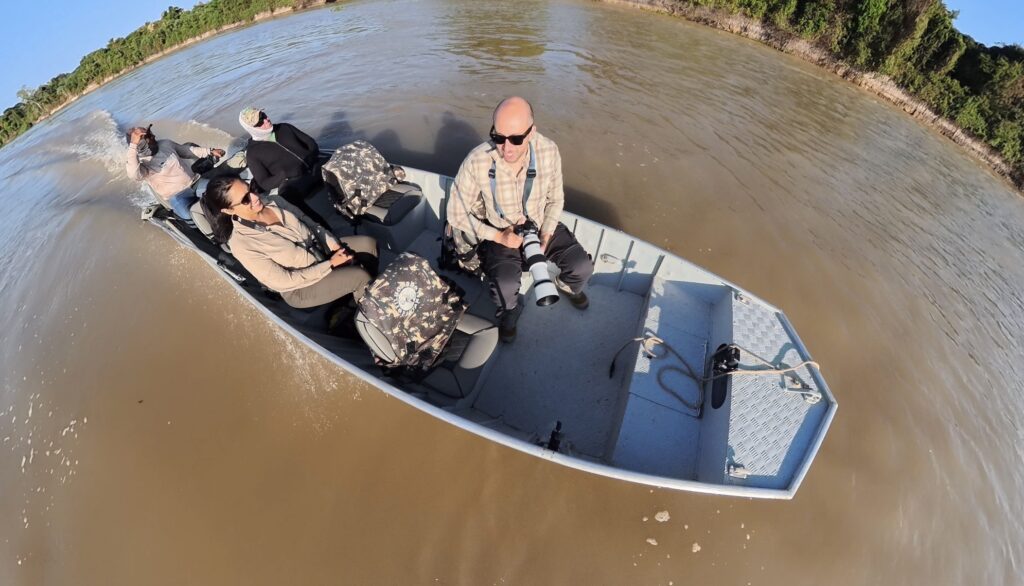
Each safari ran about eight hours on the water, with a break for lunch in the middle. It is hot and humid out there, properly muggy, so the gear matters: light clothing but long pants and sleeves, closed-toed shoes, a sun hat, a buff to protect your face from sun and bugs, heavy-duty repellent, and sunscreen.
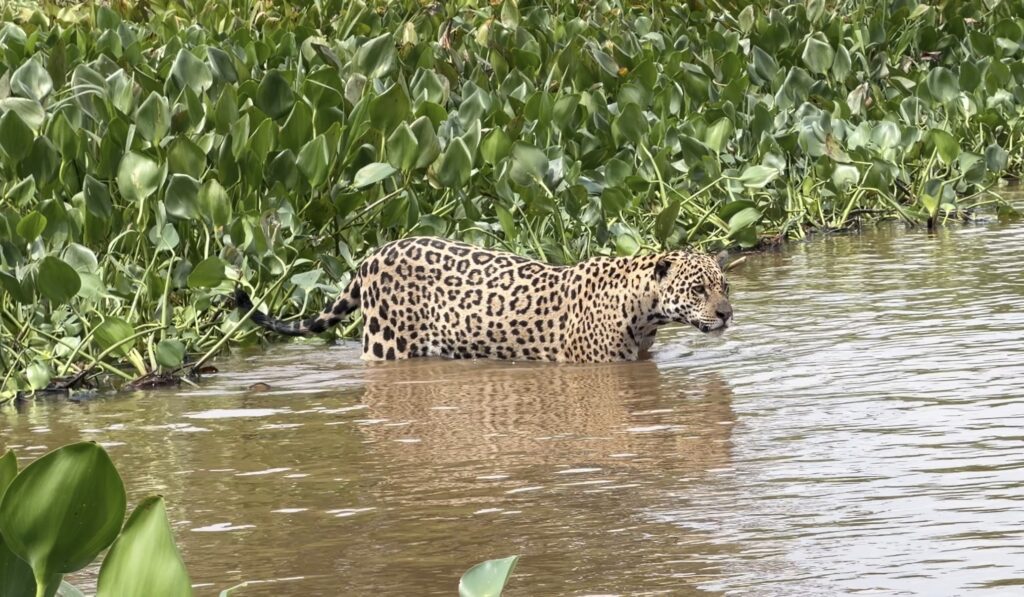
The payoff for all those hours was worth it. We saw jaguars sleeping, hunting, playing, and swimming — sometimes for a fleeting second before they vanished back into the brush, other times for half an hour of watching them move. Exhilarating is the only word for it.
One afternoon we also caught a flash of an orange-toned cat darting across, likely a puma or an ocelot, gone before we could be sure which.
Everything Else Along the Way
Between the two lodges and all the safaris, the list kept growing: howler and capuchin monkeys, marsh deer, crab-eating fox, peccary, and armadillo on the ground; hyacinth macaw, toco toucan, jabiru stork, kingfisher, caracara, and southern screamer overhead. Capybara, the world’s largest rodents, were a constant presence, practically part of the scenery at both lodges. Caiman lined every waterway we passed, mostly submerged, nothing showing but a pair of eyes and the tip of a tail, utterly still and utterly confident in its own camouflage.
The rarest find of the trip may have been the anaconda. We spotted one twice: once coiled up and still, once actually moving.
One of the most notable moments was right at the lodge. One afternoon we watched two toucans try to raid a hyacinth macaw’s nest. The macaw fought back, and the two birds went at it in a real standoff, neither side backing down. One toucan eventually gave up and flew off. The other lingered, waiting, weighing whether to try again, knowing the macaw would clip him the moment he did. It was nature working exactly the way it’s supposed to: nothing staged, nothing waiting for us to notice.
The Takeaway
Five days, two lodges, and a wildlife list that reads like a checklist for the Pantanal itself: jaguar, capybara, giant anteater, howler and capuchin monkeys, marsh deer, crab-eating fox, armadillo, peccary, hyacinth macaw, toco toucan, jabiru stork, kingfisher, caracara, southern screamer, caiman, and anaconda. The Pantanal doesn’t perform for you. It just sits there, quiet, until you slow down enough to notice it’s been alive around you the whole time. If jaguars and giant anteaters are on your list, this is the trip.