


A week in Fernando de Noronha: Brazil’s Wildest, Most Protected Paradise
Fernando de Noronha had been on my list for years. This tiny volcanic archipelago sits about 350 km off Brazil’s northeastern coast, and Brazil has decided, deliberately and aggressively, to keep it limited to tourism. Access is limited, the fees are real, and the marine life is treated like the VIP it is. We spent six nights and seven days there, diving and exploring, and it lived up to every bit of the hype.
Why Noronha Is So Hard (and Expensive) to Visit
Getting onto the island isn’t as simple as booking a flight. Once you land, every visitor has to pay two separate fees. The first is the Environmental Preservation Tax (TPA), a state tax that goes up the longer you stay — it’s designed to discourage overstaying and overcrowding. The second is the Marine National Park ticket, which is what lets you into roughly 70% of the archipelago that falls inside the protected Parque Nacional Marinho de Fernando de Noronha — beaches, trails, and natural pools included.
On top of the fees, Brazil legally caps the number of people allowed on the island: a limit of around 132,000 visitors a year and 11,000 a month. It’s a small place — the whole archipelago is only about 26 square kilometers, and only the main island is inhabited. You feel it on the ground: beaches never feel overrun, trails have real quiet stretches, and it’s easy to get a spot on a boat or tour, even in high season.
A Volcano That Went Quiet
The island itself has its own story. Fernando de Noronha is what’s left of a massive volcano that erupted roughly 12 million years ago. What you’re standing on is only the tip — the underwater base of that volcanic structure is around 60 km wide, and the visible island sits atop roughly 4,000 meters of seafloor relief.
But not everything here is volcanic rock. Over time, wind-blown sand consolidated into sedimentary limestone-like formations. So as you move around the island, you’re actually walking across two very different geologic stories: ancient volcanic basaltand wind-built sedimentary rock in others. It’s part of what gives the landscape its jagged, otherworldly look — dramatic black cliffs in one spot, pale dune-formed rock in the next.
Where We Stayed: Pousada Akana Ecológico
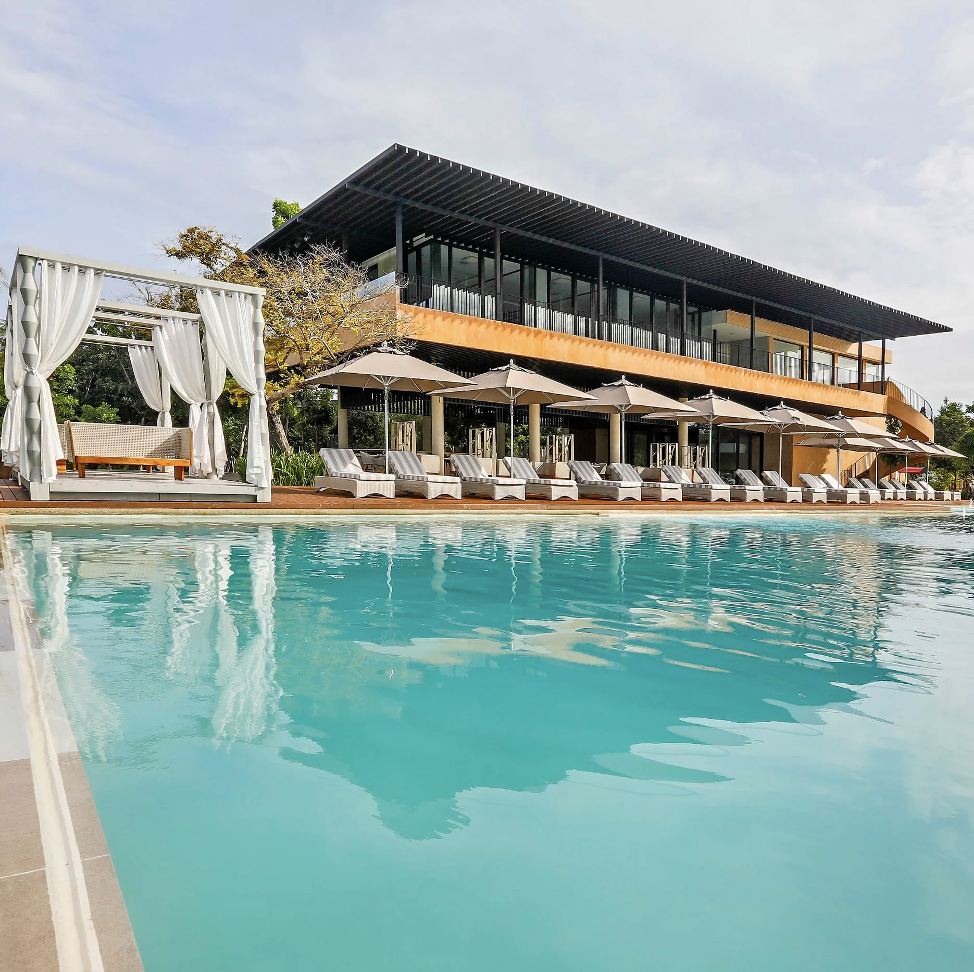
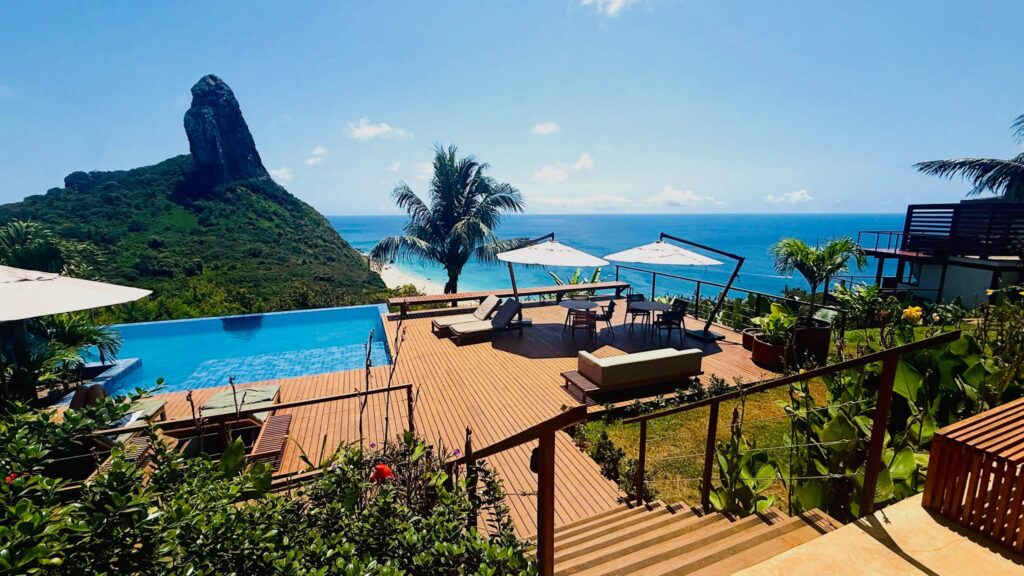
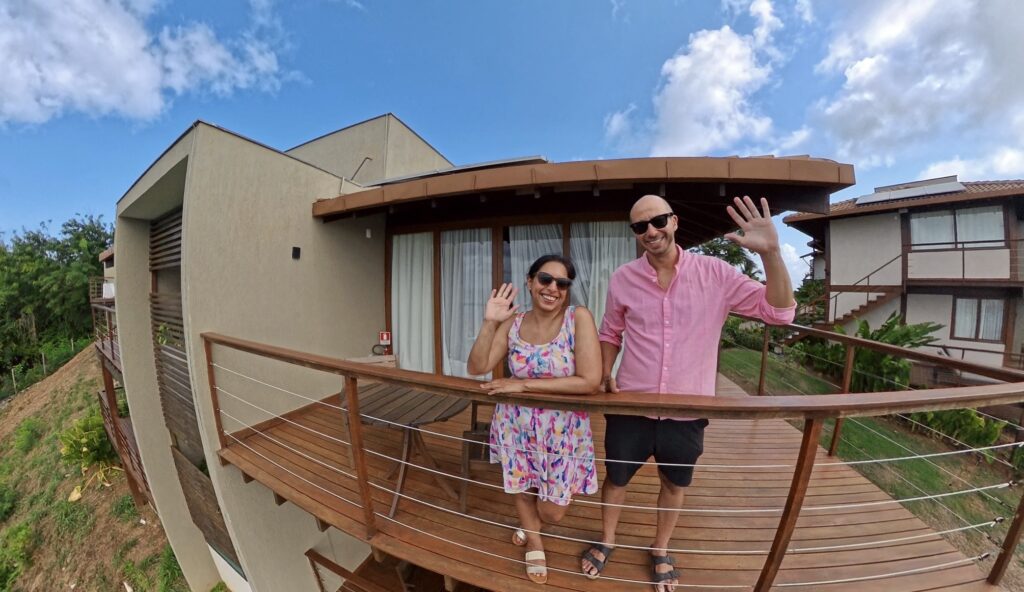
We stayed at Pousada Akana Ecológico, and it was fabulous from start to finish. We walked into the property, greeted with champagne and checked in overlooking a jaw dropping view. The rooms were beautiful, the property was stunning and the service was some of the best I’ve experienced anywhere. The concierge was so on top of everything that at a certain point I just stopped doing my own research for restaurants and activities and let them handle it.
Diving: Atlantic Dive Shop
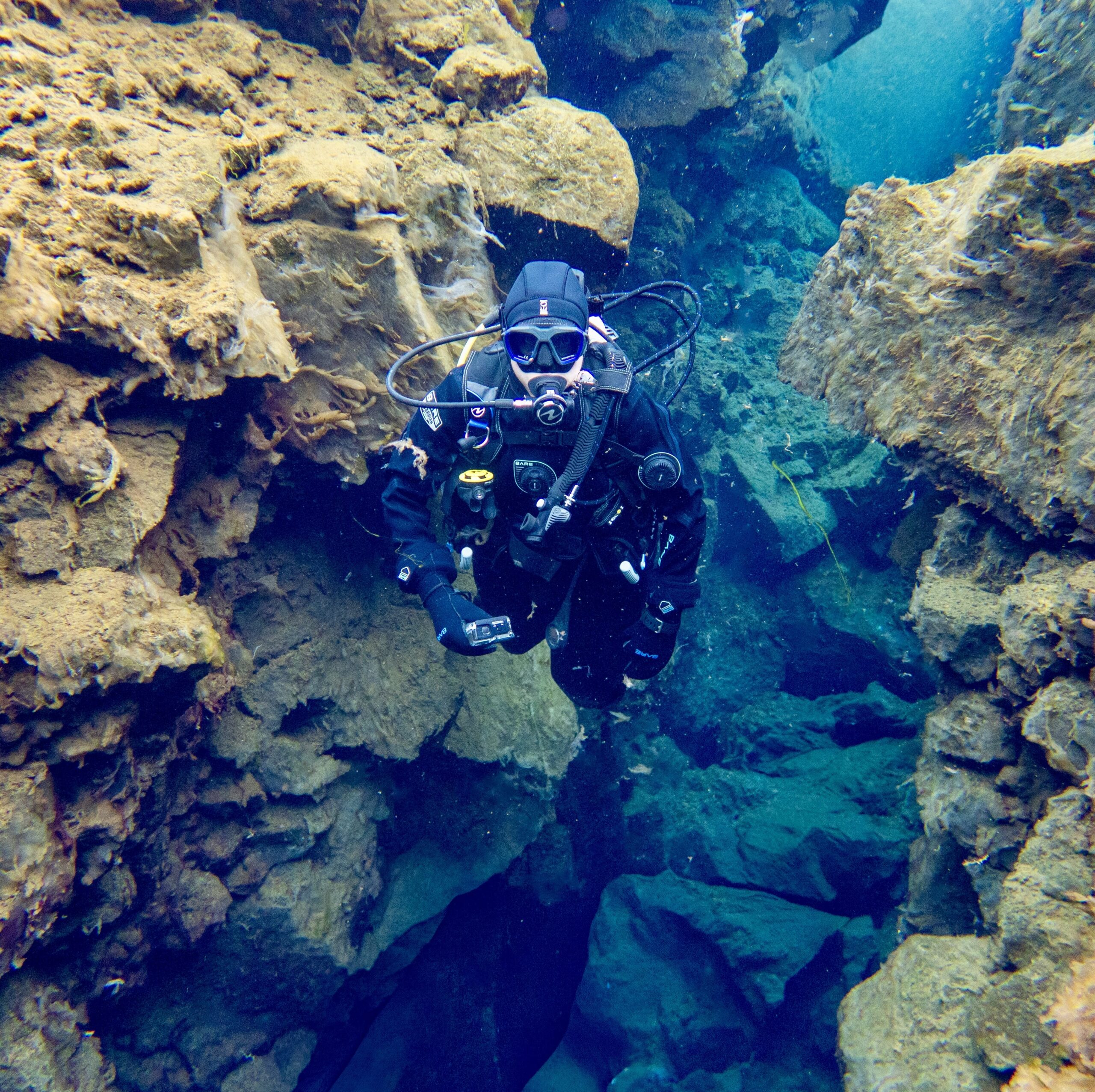
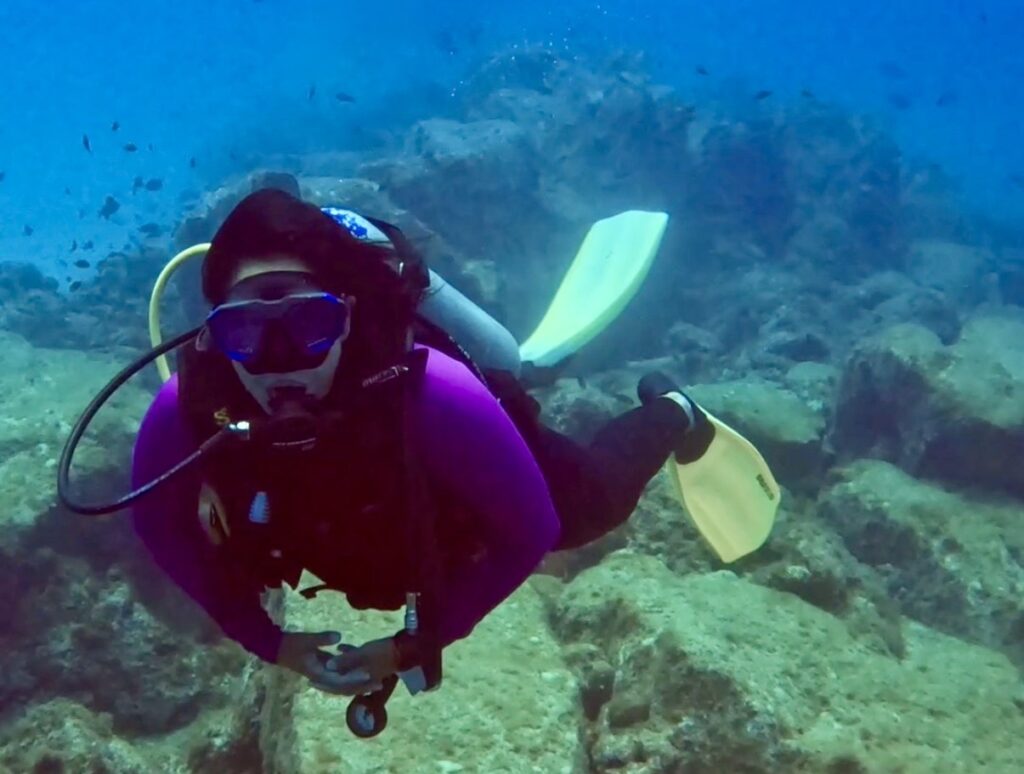
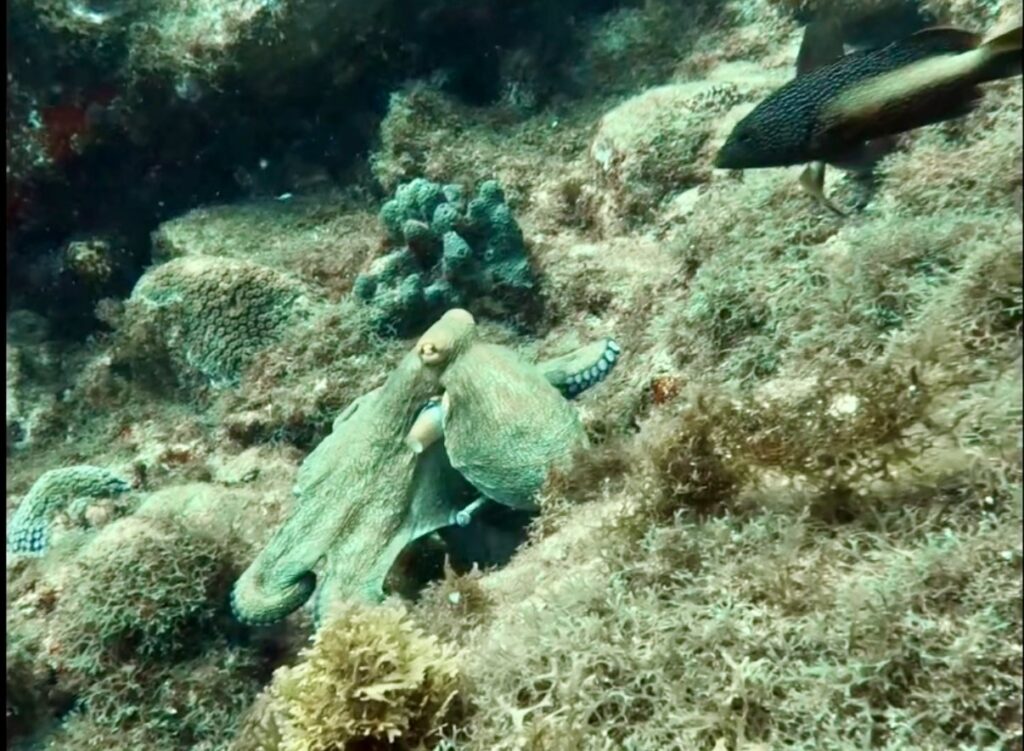
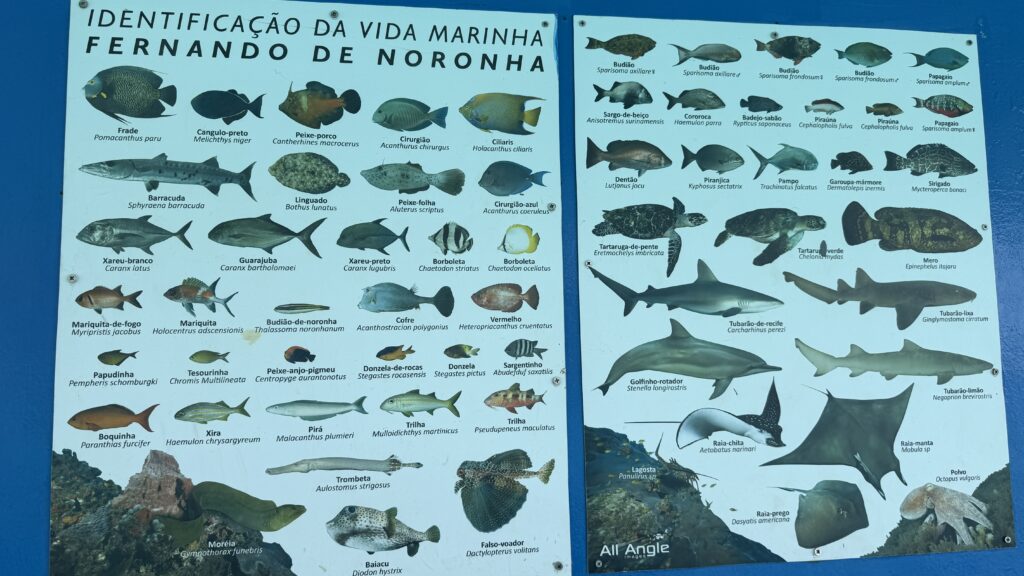
Our primary reason to visit the island was the experience to dive in marine-protected waters. We chose to dive with Atlantic Dive Shop. I did four days of diving exploring many of the dive sites. Not all dive sites were equal, but I am happy to report several spotting’s of octopus, reef sharks, turtles, morays, lobster and plenty of fish. The quality was good but despite the vast efforts to preserve the island and surrounding waters, the water temperature changes still meant some level of bleaching to the coral.
What else besides diving?
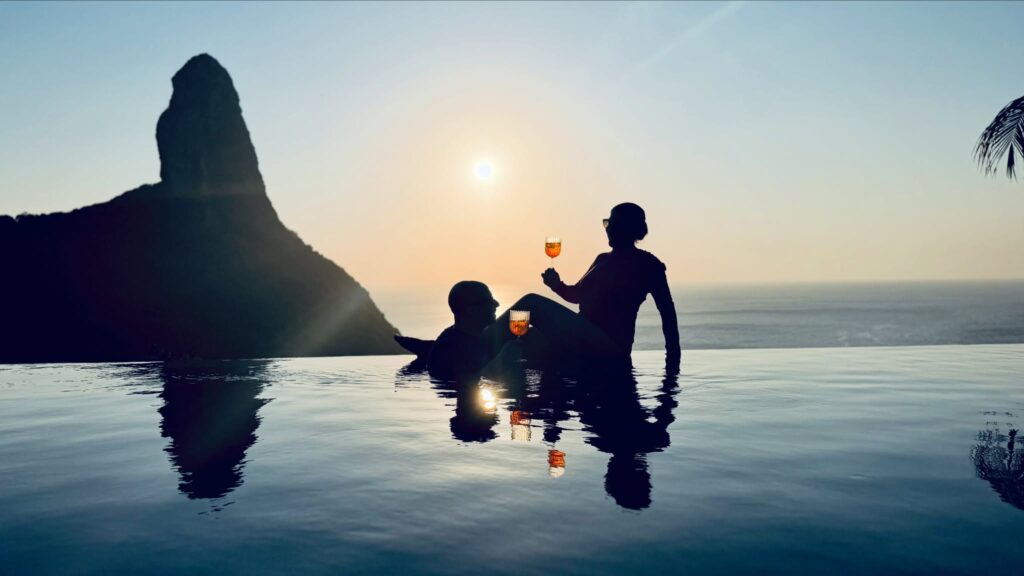
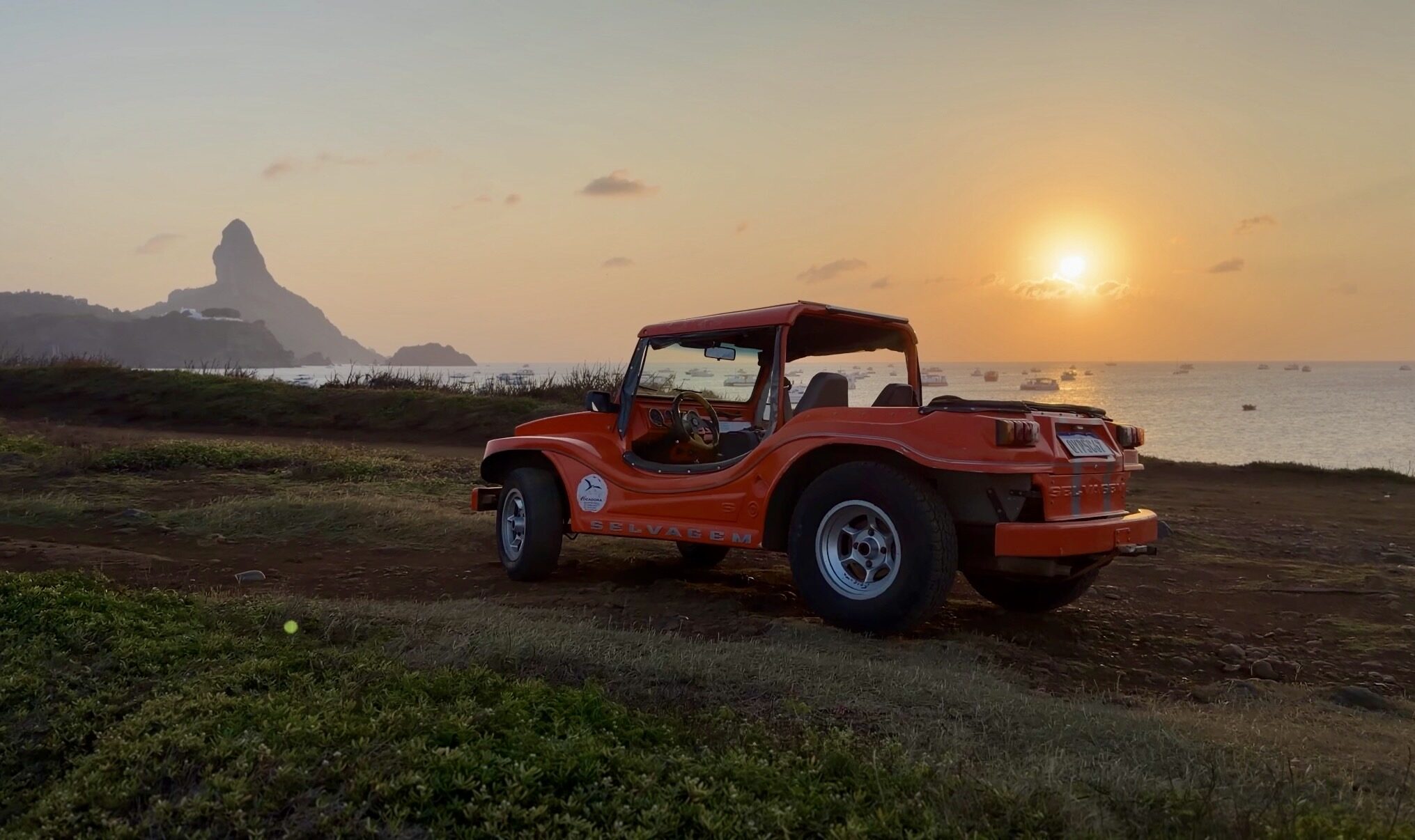
We spent plenty of timing exploring the island, on non-diving days and after diving. The island has taxis and a bus, but we chose to rent a car. It was great to get around and check out different beaches, and we explored new sunset spots every night, all of which were incredible.
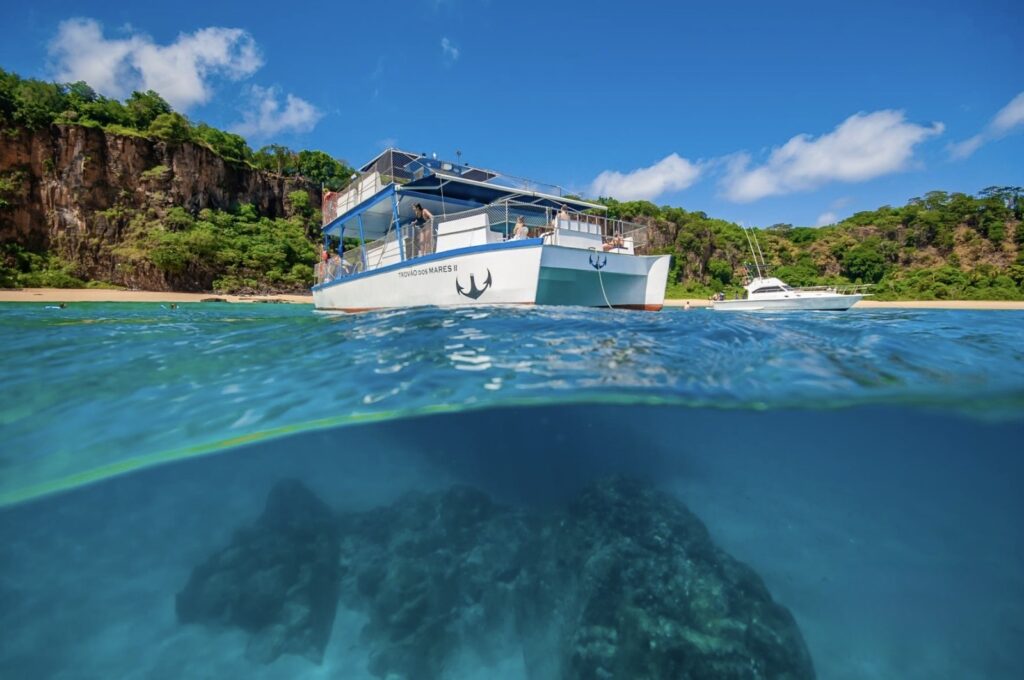
We also did a catamaran trip around the island. It was a great way to see the island’s beaches from a different perspective, and we also made a stop at Sancho Beach, rated the best beach in Brazil, to snorkel.
The Dolphins: A Daily Ritual, Fiercely Protected
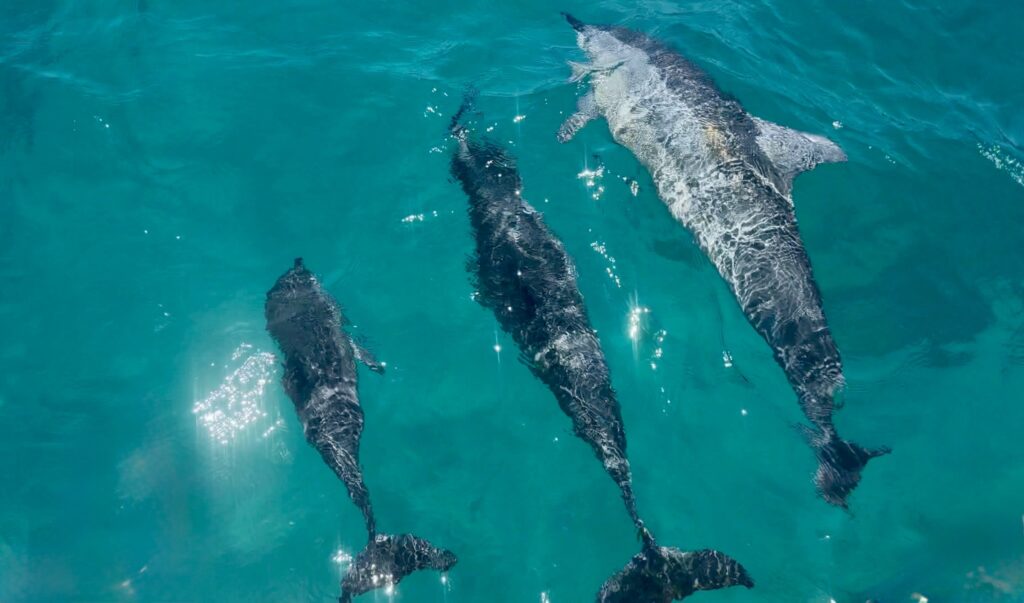
Noronha is full of resident animals, including a population of spinner dolphins. Every single day, hundreds of them swim into Baía dos Golfinhos (Dolphin Bay) after a night of hunting in open water. They rest, socialize, nurse their young, and hide from predators there before heading back out at night. Researchers with the Spinner Dolphin Project have documented dolphins entering the bay on something like 90–95% of days going back to 1990.
It’s strictly illegal to swim with, touch, or feed the dolphins — a rule enforced by ICMBio, the federal agency that manages the marine park, and patrolled on the water. So the only way to see them is if you happen to be on a boat or tour and encounter them, or from land at Baia dos Golfinhos.
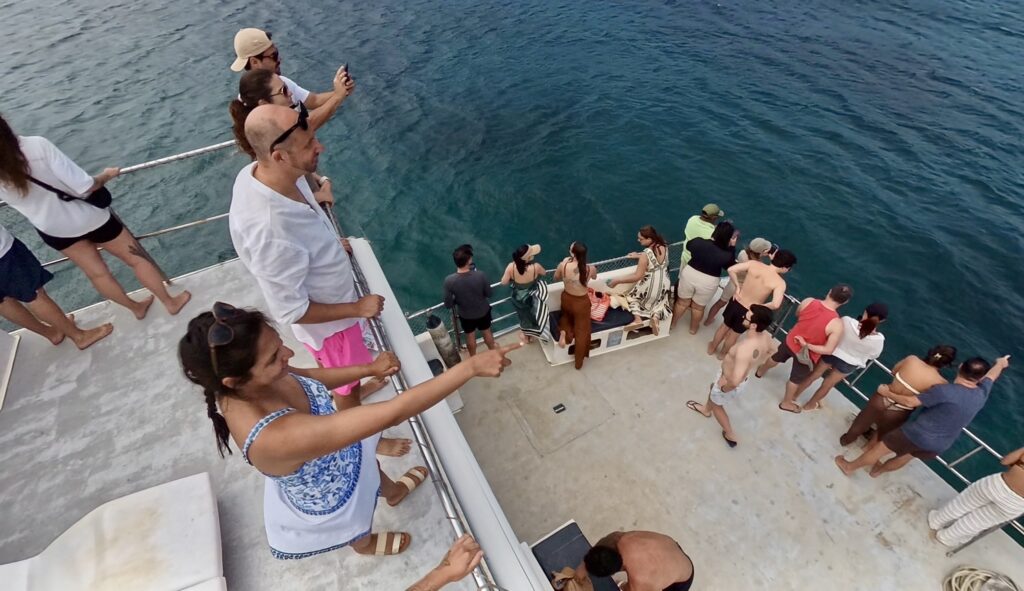
I got to see the show twice — once from a catamaran tour and once from the dive boat on the way back from a dive site. Both mornings, watching them leap and spin as a group was one of those “I can’t believe this is real” moments. There were just so many of them!
The Turtles of Port Beach
Sea turtles are the other reason Noronha feels different from anywhere else. Project TAMAR has been researching and protecting sea turtles in Brazil since 1980, and it’s been working specifically in Noronha since 1984. The archipelago is one of the country’s most important feeding and nesting grounds for these turtles.
The Tamar team tags turtles for research. Praia do Porto (Port Beach) is where you’ll see the payoff of decades of this work up close — it’s genuinely filled with turtles. We swam right alongside several green sea turtles just meters from the sand, no boat or gear required. The turtles were there in pods, which is unusual where normally you just see one of them. It’s one of the most accessible, easy wildlife encounters I’ve had.
Summary
Noronha isn’t a place you visit casually — the cost, the caps, and the paperwork make sure of that. But that friction is exactly why the dolphins still show up every morning, why the turtles still nest on the same beaches they always have, and why the water is as clear as it is. What an amazing week!