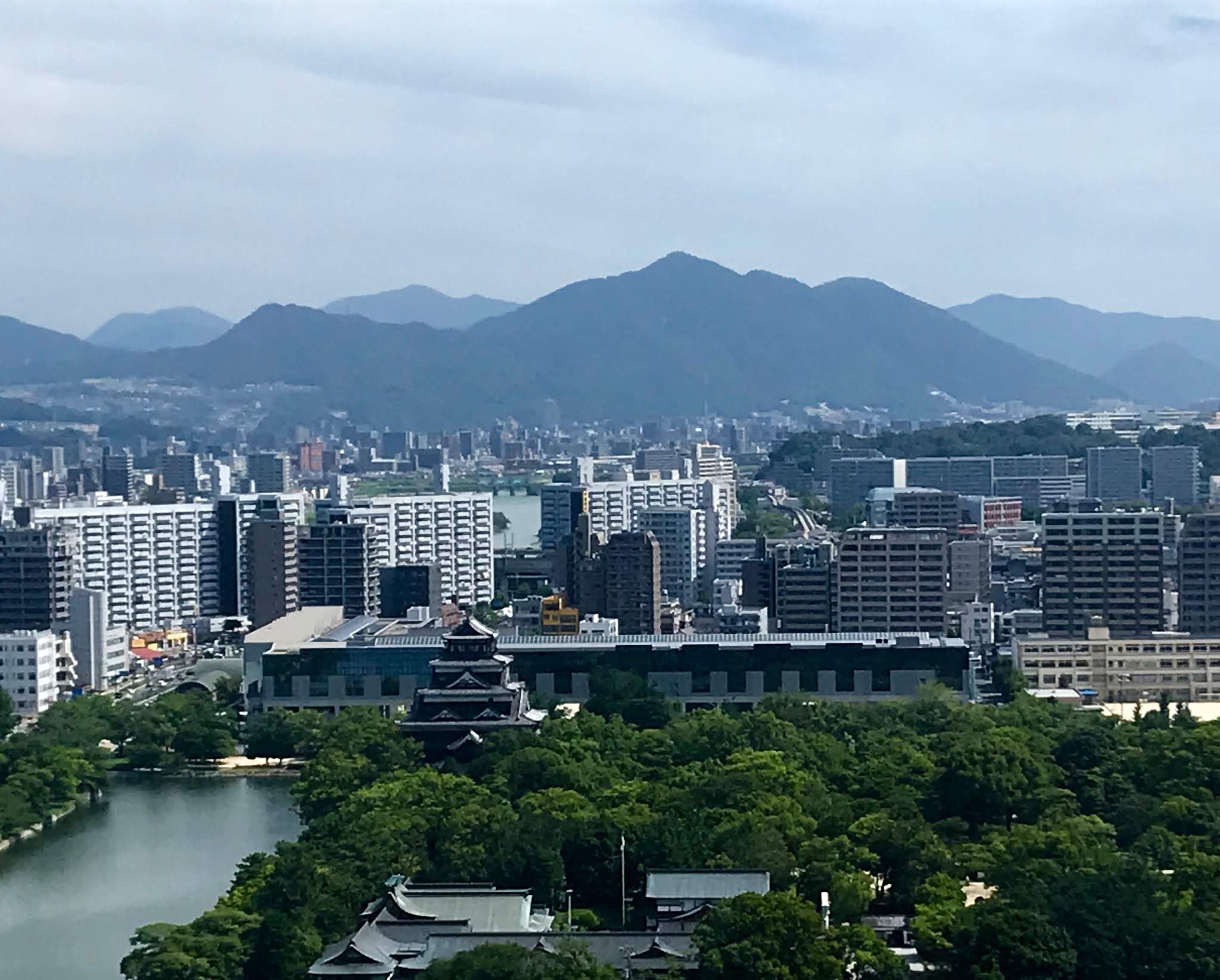



I’ve been to Tokyo a few times but it has been on Adam’s list forever. Since we were on our way to the Philippines for a dive trip, a stopover felt like the obvious move. Three and a half days in December turned out to be the perfect introduction to our trip: cool enough to walk endlessly and packed with some of the best food and nightlife in the world.
If you’re planning a December trip to Tokyo or squeezing the city into a longer Asia itinerary, this guide is about how to experience Tokyo’s neighborhoods, food scene, and energy in a short amount of time.
Is December a Good Time to Visit Tokyo?
Short answer: yes, surprisingly!
We arrived in mid-December to temperatures hovering around 50°F (10°C), with a bit of rain but nothing that slowed us down. It felt crisp rather than cold, perfect for walking all day and ducking into ramen shops, cocktail bars, and cafes. December also brings holiday lights and Christmas markets, which added a festive layer to the city.
Tokyo Nights: Ramen, Cocktails, and First Impressions
After landing, we kept things local for our first night.
Gyoza + Ramen in Ginza
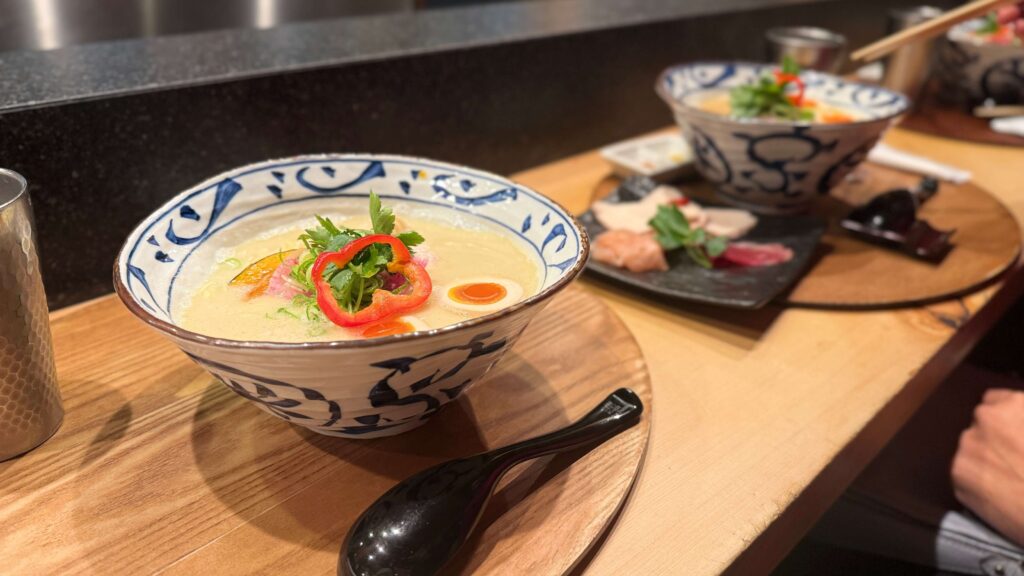
We started with Chao Chao Gyoza for a quick gyoza appetizer before committing to a longer ramen wait. Then came Ginza Kagari, a soba-style ramen spot with a line out the door — in pouring rain. Still worth it. The broth was rich but refined, and it felt like exactly the kind of meal you want after a long-haul flight.
Tokyo’s Cocktail Bar Scene
Tokyo takes cocktails very seriously and we decided to to try to of its famous and ranked bars that evening.
Bar Orchard was pure fun. There’s no menu — just a pile of fruit. You choose one, and the bartender creates something on the spot. Adam’s pear cocktail arrived in a coconut-shell glass with a bird’s beak; mine was a mango smoothie-style drink served in a baby bottle with a Hello Kitty bib. Ridiculous and delightful in equal measure.
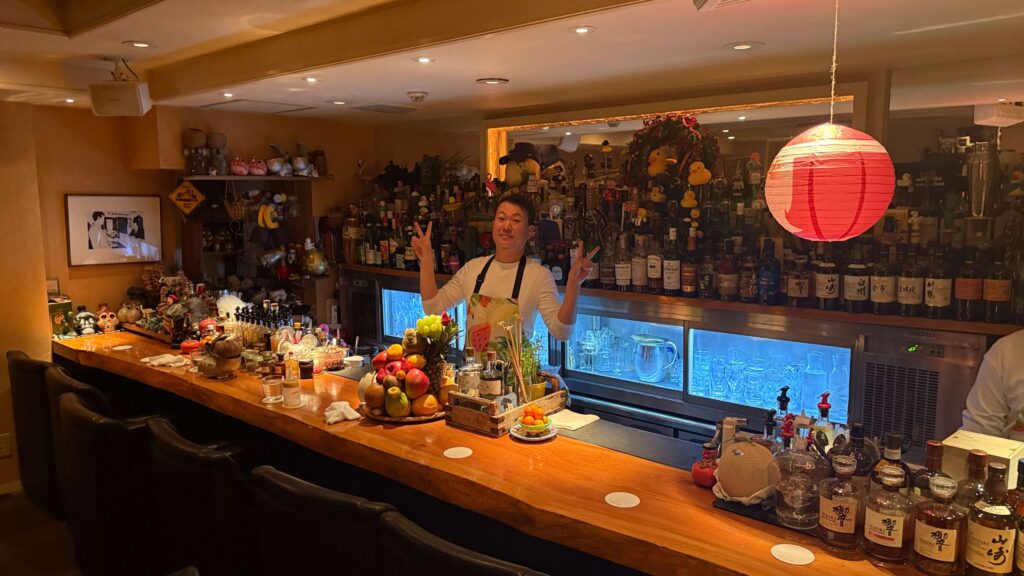
Bar High Five was the opposite: refined, minimalist, and technically perfect. If you didn’t know you were in Tokyo, you could have been anywhere in the world.
Exploring Tokyo with a Local
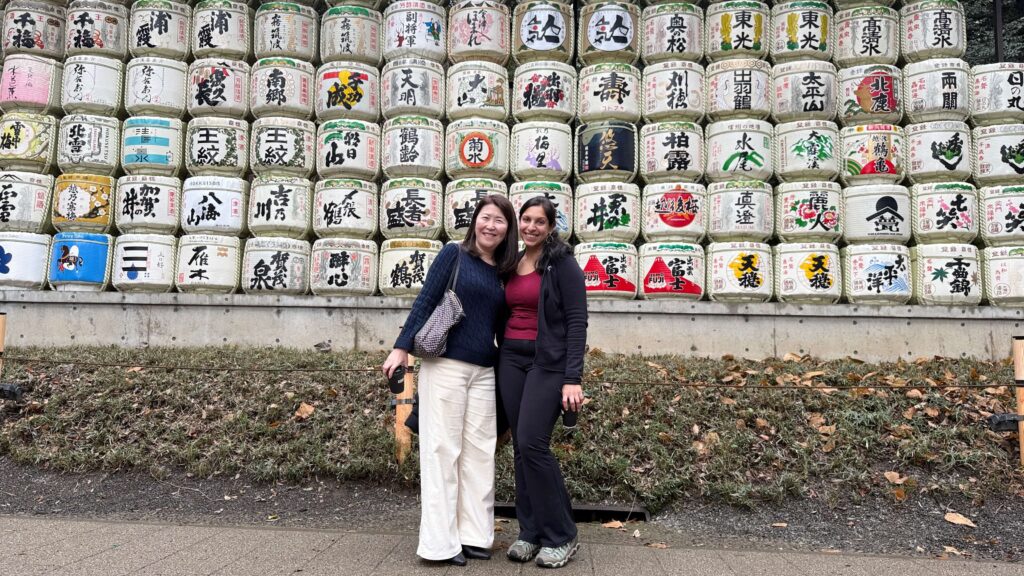
One of the highlights of the trip was meeting up with my friend Atsuko, whom I know from business school. Seeing Tokyo through a local lens is always special.
Tsukiji Outer Market
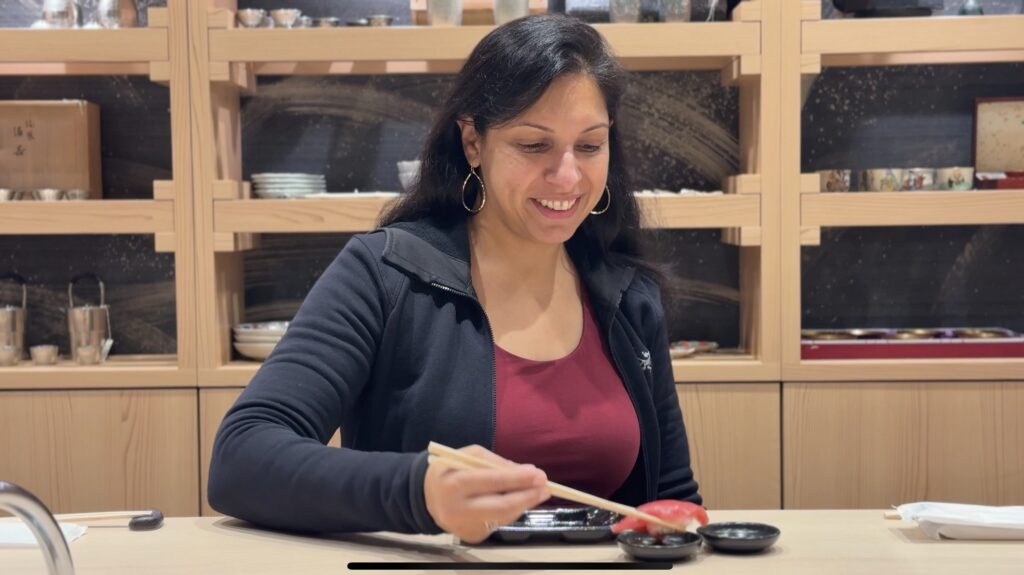
The next morning, we headed to the Tsukiji fish market for sushi. Fresh bluefin tuna, simple preparations, and some of the best fish I’ve ever had. Even though the wholesale market has moved, Tsukiji is still absolutely worth visiting for breakfast.
Harajuku + Meiji Shrine
We wandered through Harajuku — chaotic, colorful, and endlessly entertaining. Harajuku feels like Tokyo turned up to full volume. The streets pulse with energy — packed sidewalks, dog, pig and capybara cafes, neon signage competing for attention, rainbow pancakes and cotton candy and an endless flow of people moving in every direction. Teenagers in head-to-toe street style weave past tourists clutching crepes, while costumed characters, trendsetters, and shoppers blur together into a constant, colorful parade. It’s chaotic, crowded, and unapologetically over the top — a sensory overload that somehow works.
And then, almost jarringly, you step off the main drag and into the quiet of Meiji Shrine, where the noise drops away and the city exhales. It reminded me of walking through Central Park. The air feels different here — cooler, quieter, and heavier in the best way. Dedicated to Emperor Meiji and Empress Shōken, the shrine is enveloped by a man-made forest intentionally designed to mature over generations, lending the space a timeless, grounding presence in the very heart of the city.
Shibuya
We then made our way to Shibuya, easing into the neighborhood with a bit of window shopping at Tower Records (pure nostalgia) and a stop at the Nintendo Store, before the energy outside fully took over. Shibuya feels like Tokyo in constant motion — massive video screens flashing overhead, music blaring from every direction, crowds surging through intersections with choreographed chaos.
Crossing the Shibuya Scramble is an experience in itself: hundreds of people pouring into the intersection from all sides at once, umbrellas and shopping bags weaving past one another in a perfectly imperfect rhythm. It’s loud, disorienting, and somehow mesmerizing.
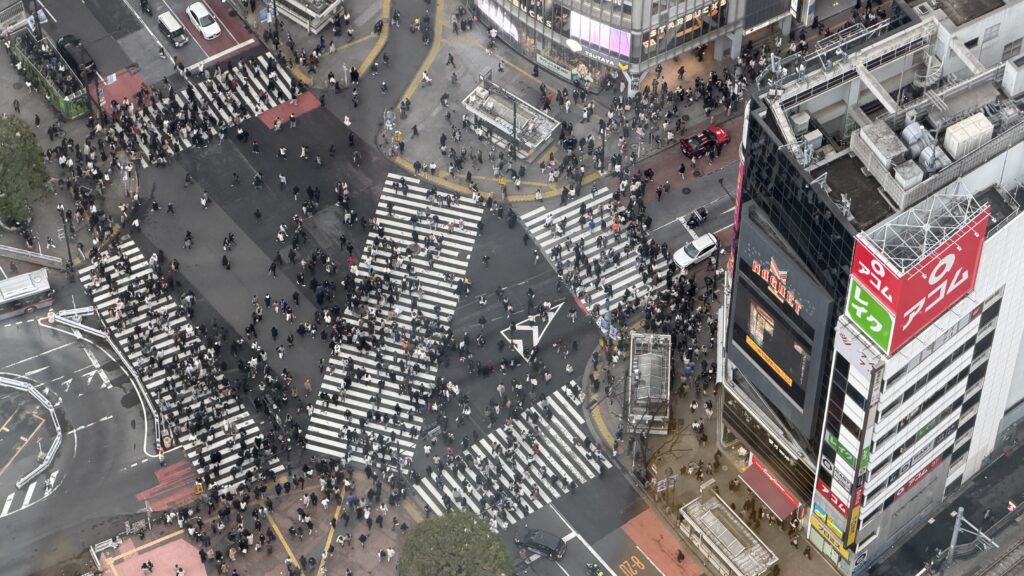
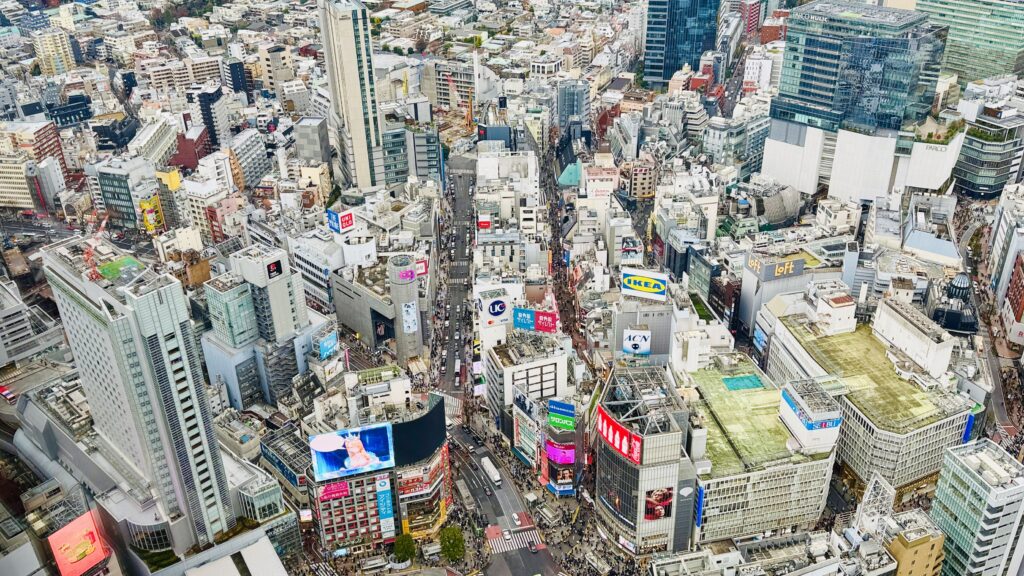
If you only do one observation deck in Tokyo, make it Shibuya Sky. The open-air rooftop gives you a front-row seat to the sheer scale of the city, with the chaos below shrinking into something almost poetic. Around sunset, when the lights flicker on and Tokyo stretches endlessly in every direction, it’s hard to imagine a better vantage point.
Akihabara + Tokyo Station
We ended the day in Akihabara, where the streets glow with towering anime billboards, arcade sounds spill onto the sidewalks, and every building seems stacked floor-to-ceiling with gaming dens, capsule toy shops, and niche electronics. It’s hyper-saturated, unapologetically nerdy, and relentlessly overstimulating — a place where fandom is celebrated at full volume and the line between fantasy and reality feels deliberately blurred. Adam was like a kid in a candy store, ducking into tiny electronics shops hidden down side streets and climbing narrow staircases to uncover old-school video game stores stacked floor to ceiling with nostalgia.
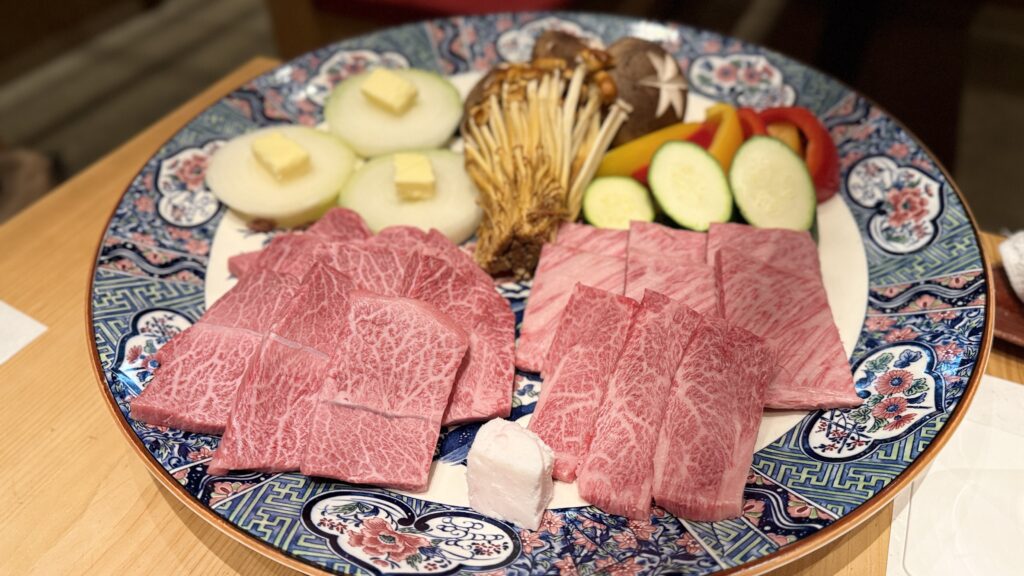
From there, we made our way to Tokyo Station for dinner, wandering through the Christmas market along the way. The holiday lights were unexpectedly beautiful, casting a soft glow over the brick station buildings and giving the area an almost European feel, before we wrapped up the night with teppanyaki.
Our second day: Wandering through the neighborhoods and real-life Mario Kart
Soufflé Pancakes
Tokyo’s famous fluffy pancakes were high our list… until we saw a 90-minute wait for Ginza Cafe hanon the day before. So we came back the next morning, but more prepared. We arrived early — before opening — at Ginza Cafe Hanon, and it paid off. Light, fluffy, barely sweet, and worth the effort if this is on your Tokyo bucket list.
Asakusa + Senso-ji
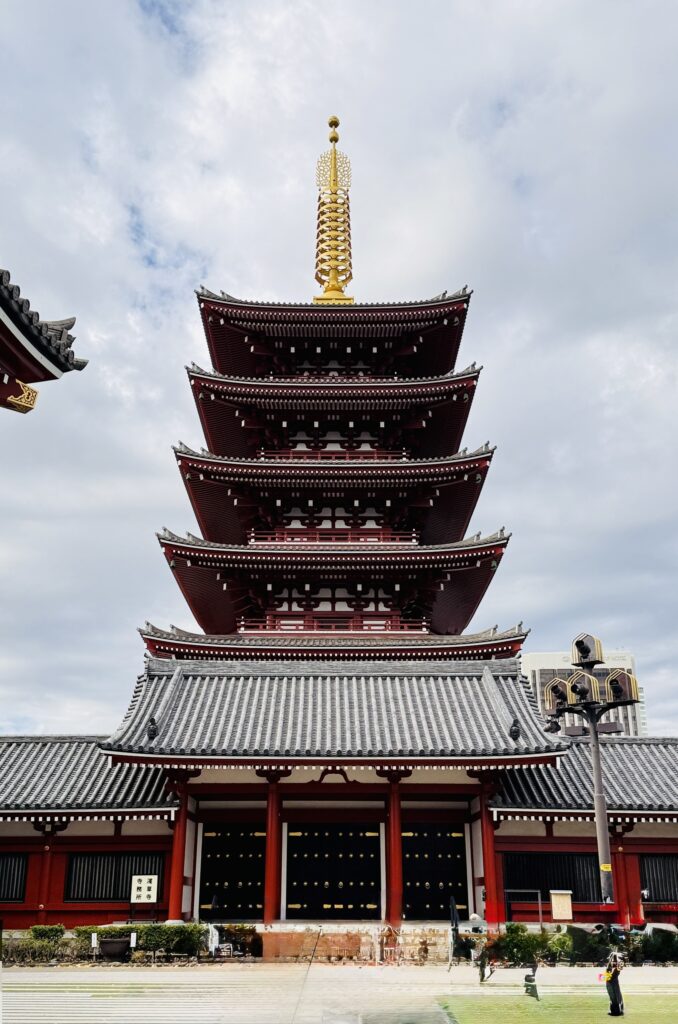
From there, we made our way to Asakusa, one of the city’s most traditional neighborhoods and home to Senso-ji, Tokyo’s oldest temple. The approach to the temple is lively and crowded, lined with stalls selling snacks, souvenirs, and charms, but the atmosphere shifts as you move closer to the main hall. Incense hangs thick in the air, smoke curling upward as visitors waft it toward themselves for luck and health. Despite the crowds, there’s a sense of reverence here — people pausing to pray, draw fortunes, and take in the weight of history that contrasts sharply with the modern city beyond the gates.
After wandering the surrounding streets and soaking in the energy, we headed to Roppongi for lunch at the famously over-the-top Kill Bill restaurant. The space leans fully into its cinematic inspiration — dramatic lighting, themed decor, and a vibe that feels intentionally theatrical.
Real-Life Mario Kart
Later in the afternoon, we leaned into pure novelty with go-karting through Shibuya. Dressed up and driving through some of the busiest streets in the world felt absurd in the best way — weaving past iconic intersections, neon signs, and crowds of pedestrians who stopped to wave and take photos. Seeing Tokyo from street level, immersed in its motion and noise, was chaotic, exhilarating, and surprisingly unforgettable.
We wrapped up the night in Shinjuku, where Tokyo feels like it never fully powers down. Neon lights stack on top of each other, alleyways buzz with life, and every block seems to offer something entirely different. We spotted Godzilla looming over Kabukicho, paused to watch the massive 3D cat ripple across its screen, then ducked into Piss Alley (Omoide Yokocho) for its gritty charm and smoky energy. The night ended in Golden Gai, a maze of tiny bars — some barely big enough for a handful of people — each with its own personality, soundtrack, and regulars. It was loud, crowded, and endlessly entertaining, the perfect snapshot of Tokyo after dark.
Day Three: Slowing Down, Then Seeing Tokyo Differently
For our third day, we kept our focus tight, pairing quieter moments with one immersive experience — a rhythm that felt especially right in December.
We started the morning slowly, lingering over breakfast at the hotel before heading out into the crisp winter air. December turned out to be ideal for exploring on foot — cool enough for long walks, easy to layer, and energizing rather than exhausting. With the city still waking up, we walked toward the Imperial Palace, where wide paths, open space, and carefully kept greenery created a rare sense of calm in central Tokyo.
From there, we headed to teamLab Planets Tokyo, an experience I wasn’t entirely sure I’d enjoy — and ended up loving. The exhibit is immersive in every sense: barefoot and reflective. Walking through water with projected koi swimming around your legs, standing beneath infinite points of light, and wandering through rooms filled with floating orchids felt less like visiting a museum and more like stepping inside a dream. It was thoughtful, disorienting, and memorable in a way that lingered long after we left.

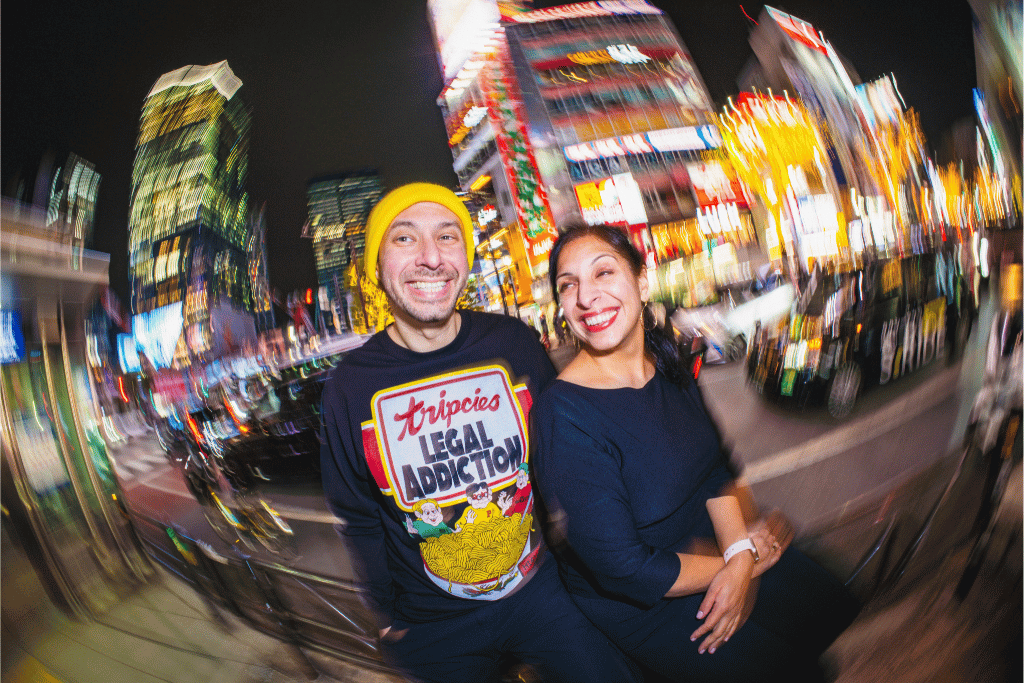
That evening, we leaned back into the city’s energy — but in a more curated way. We did a Tokyo photoshoot in Shinjuku, something I’d highly recommend if you enjoy photography or want to experience the city from a different perspective. Wandering through neon-lit streets, back alleys, and busy crossings with a local photographer gave us a new lens on Tokyo — one that slowed us down just enough to notice the details we might otherwise have rushed past.
By this point in the trip, we’d also learned a few practical truths. Lines are real in Tokyo, and deciding ahead of time what’s worth waiting for — and showing up early — makes a huge difference. Cocktail bars are experiences, not just drinks, and carving out time for them is always worth it. And if you can, spend even half a day with a local guide or friend — it changes how the city unfolds around you.
Summary
Three and a half days in Tokyo barely scratches the surface — but it’s enough to fall in love. December turned out to be a perfect time to visit: festive, walkable, and just quiet enough to savor the moments between the must-sees.